
Ordinary Objects, Extraordinary Stories: Photo Exhibition to Mark Black History Month
curated by Prospera Tedam
University College Dublin
Photo Exhibition. 2026.
KEY WORDS
Black History Month, diversity, inclusion, belonging, photography, university, students
Introduction
It is my great pleasure to welcome you and open this exhibition to celebrate Black History Month in University College Dublin. The title of the exhibition is ‘Turning the Lens: Racism, Resistance, Allyship’.
This exhibition has been curated by Professor Prospera Tedam from the UCD School of Social Policy, Social Work and Social Justice.
As you navigate through the visual artifacts and stories of this virtual gallery, you will encounter the stark realities of racism, both systemic and deeply personal. You will see it represented in a piece of burnt toast, a symbol of the permanent, searing trauma of racial injustice and the stolen potential left in its wake. You will hear it in the echo of a far-right chant recalled alongside a National Front flag, and in the painful childhood memory of a painting titled Mice in Letterbox, depicting a family terrorised simply for being the first Black residents on their block. You will see it in the ‘White Doors’, the institutional gatekeeping, microaggressions, and performative “White gaze” that force Black professionals to navigate constant scrutiny just to have their expertise recognised.
Yet, this exhibition is not only a witness to pain; it is a testament to resistance and defiance.
Resistance looks like the steel Kara bangle worn on a wrist, a sacred Sikh symbol of eternity, equality, and pride worn openly despite prejudice. It looks like the Romani flag pin worn on a university lanyard, an act of unyielding visibility and self-worth in spaces where minoritised identities have long been pushed to the margins. It is found in the ‘Wokerati Mug’, a defiant reclamation of the commitment to stay alert to injustice. And it is embodied in the academic who, after facing relentless attempts to undermine her doctorate and qualifications, stood tall to receive an award for teaching excellence.
Finally, this exhibition calls us to examine allyship and deep self-reflection. Allyship is present in the story of a social worker holding a kirpan, who chose to unlearn media stereotypes, educate themselves on their partner’s faith, and step in to protect a Sikh stranger’s rights. But real allyship also demands uncomfortable self-scrutiny, symbolised here by a dusty, light-up magnifying mirror. It reminds us, particularly those who hold racial privilege, that we cannot champion equity until we are brave enough to look closely at our own privileges and positionalities.
These images and the words of contributors invite us not just to look, but to reflect on the doors that are still shut to minoritised individuals and how each of us, in our own practice and daily lives, can actively turn the lens toward resistance, justice, and authentic allyship.
As a complement to this exhibition, you are invited to watch a short video “Ordinary Objects, Extraordinary Stories” produced by Prospera Tedam and Mark Doel about the context in which the exhibition was created and curated.
Associate Professor Ernesto Vasquez del Aguila
Vice Principal, Equality, Diversity and Inclusion / Widening Participation
College of Social Sciences and Law
University College Dublin
Welcome
The UCD College of Social Sciences and Law is a diverse community and our activities and events are an opportunity to reflect on those within and connected to our College who give of their time, expertise, experience and contribute to what makes us UCD. This year the theme of Black History Month is Honouring Our Communities and it’s a very fitting theme for us to be celebrating. It invites us to look more closely at something we often take for granted; the communities that shape, support and sustain us – the people around us, their contribution to our lives and care.
Recognition is important. But history is not only made in moments of visibility. It is built over time, through consistent acts of care, leadership and responsibility and it is our intention to bring some of these ‘invisible’ acts to the forefront today.
This year is 100 years since Black History month was officially launched in the US in 1926 with the title Negro History Week. Since that time, much progress has been made on addressing racism within our communities, societies and institutions but there is still substantial work to be done. As Chair of the University Dignity and Respect Oversight Group, it is important for me that we look at structural barriers to equality, that we provide opportunities for representation and inspiration to all in our community and that we maintain ongoing reflection so that we might make further progress together on ensuring all in our community are supported, included and visible.
Professor Niamh Moore-Cherry
College Principal and Dean of Social Sciences
College of Social Sciences and Law
University College Dublin
Title: Award BJSW
Code: BH01
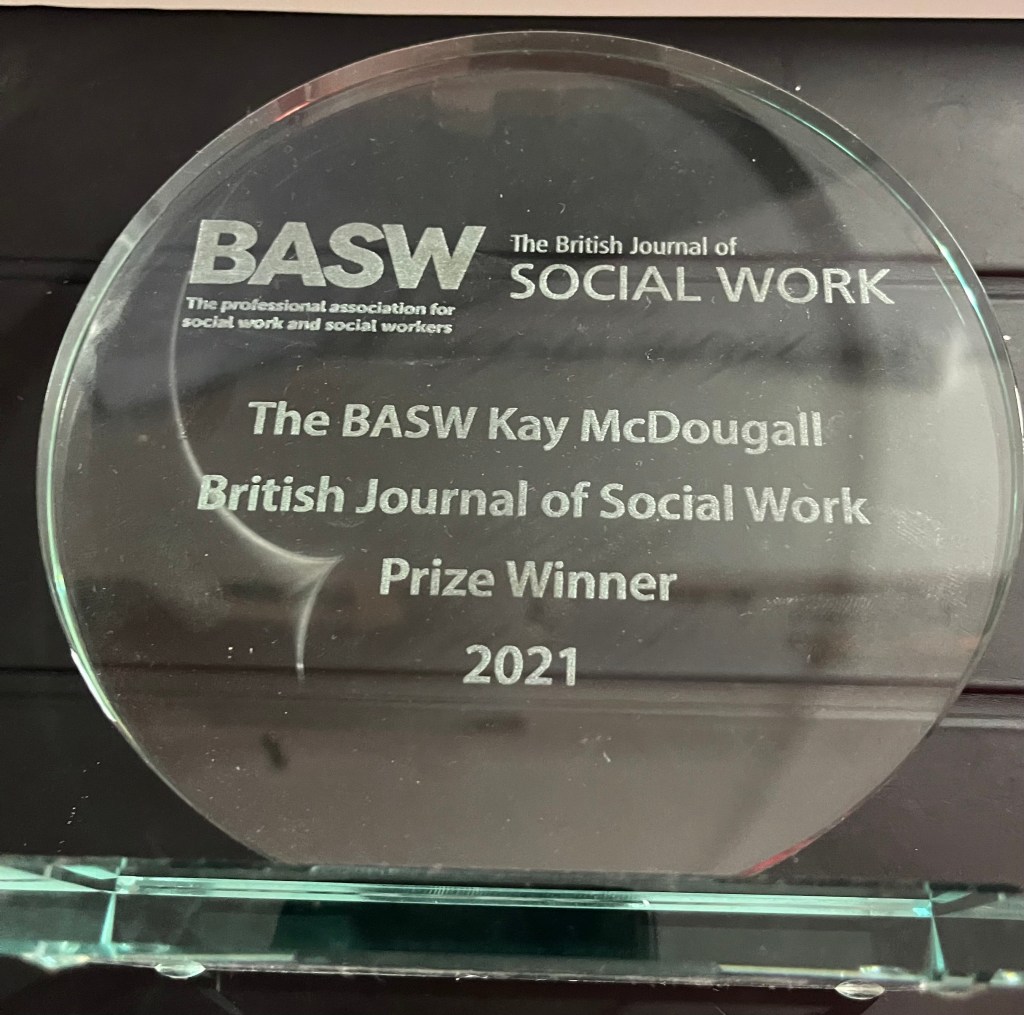
I am a dedicated lecturer, with passion for imparting knowledge to students. I know that I am a good teacher because of the extra work I put in and the strong positive response from some students. There are however some students whom I can only describe as racist because of the vitriol and personal nature of their criticism of my practice. A few white female students wrote in some course evaluations that I was not a good teacher and most likely had not earned my doctorate degree, so, all my other degrees should be questioned, especially because I had studied in Nigeria. In one evaluation, following a session on feminism, a white female student called me a ‘man-hating African bitch’ – I think she really wanted to say the ‘n’ word.
In another instance, which is a confidential matter, a white female student reported me to the regulator (Social Work England). She said I was a incompetent lecturer because I had refused her Personal Tutor to provide her a letter of support to the GP for hormone replacement therapy for menopause. I had no knowledge whatsoever that she had such a problem and it was a complete shock to hear of the matter from the regulator. The regulator to my mind was also complicit in that racist referral because they should have seen it for what it was, especially because, unbeknownst to me, the university had previously received, explored and dismissed the allegations against me, and the regulator already knew that before they accepted the referral and put me through a fitness to practise investigation. This student had also alleged that I was not qualified to be a social work lecturer and queried my doctorate. It was apparent that some white female students did not enjoy having a Black African woman in a position of authority over them, and were desperate to undermine my knowledge and achievements. When I was nominated for the above award, I cried because it was a rebuke to the racist white women who have made me consider quitting academia. I saw the award as an antidote to the racism I had experienced. No longer can racists get to me, when others who are experts in the field can see my worth. I gave a public lecture as part of the award and this was posted on YouTube. I also loved the fact that people commented on my excellent teaching skills regarding that lecture. Not only can I write well, I am good at research and teaching. To the world, and hopefully to past and future racist students, I am an excellent academic.
Title: Bangle (Kara)
Code: BH02
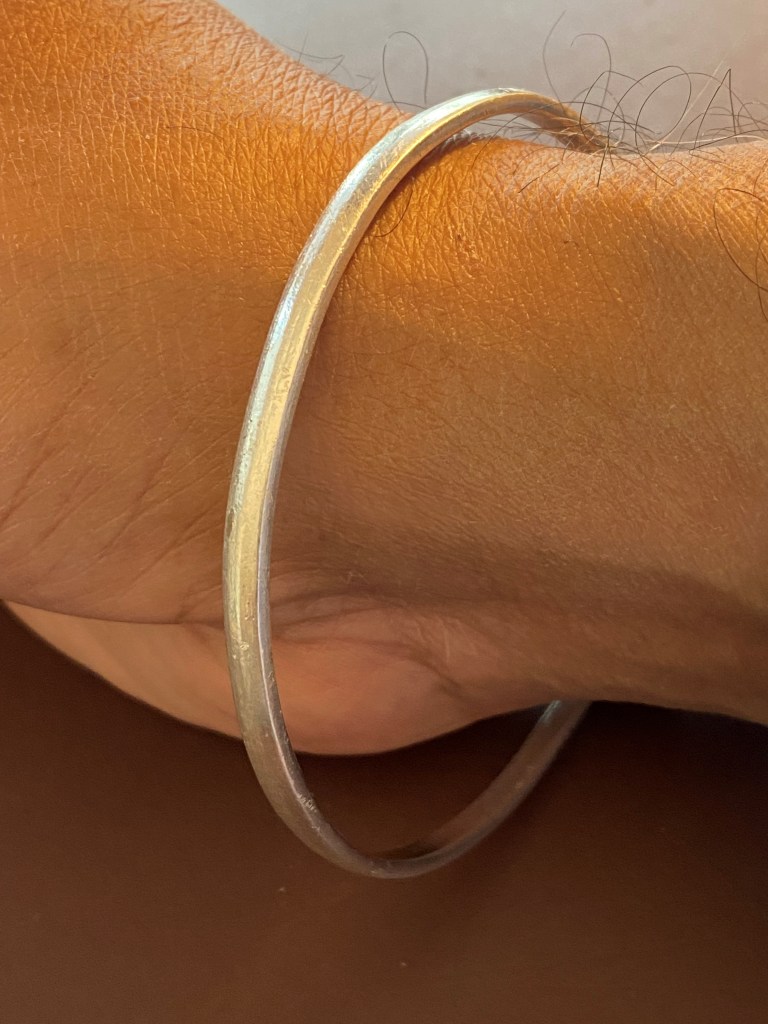
This object is called a Kara. It is a steel bangle that is worn by Sikhs. This object represents anti-racism because Sikhs believe in equity and equality and having reverence for god. Being a Sikh is represented by the five ‘K’s, which are objects worn by Sikhs, of which the Kara is one. Wearing the Kara symbolises my belief in Sikhism and in turn my belief in equality and in turn the struggle for anti-racism. The Kara is a round bangle which in itself represents eternity and the on-going commitment to equality.
Racists have seen me wearing the Kara and have used to be racist towards me and to disrespect my religion, ethnicity and culture because the Kara is so visible, like the colour of my brown skin. However, I wear it visibly with pride and love as it represents my parents heritage from the Punjab in India, it represents my parents struggles and victories in life, it represents my faith, my struggle for anti-racism and equity. I am proud of who I am, my background and the Kara is a visible representation of that defiance.
Title: Basket
Code: BH03
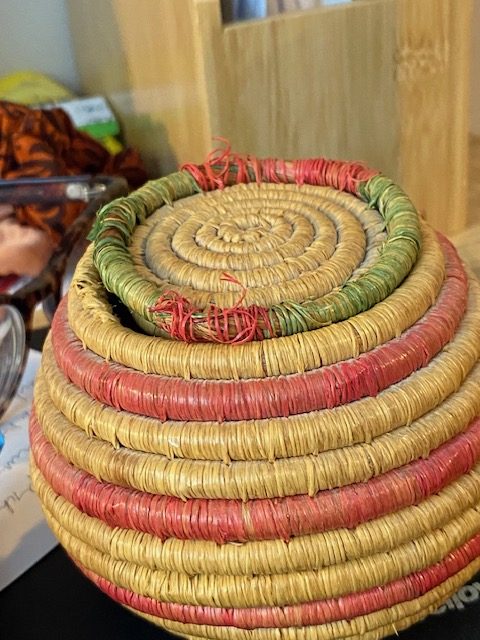
The object is an African basket given to me by my mum. When I look at it I am reminded of the racism that she encountered when first arriving in the UK from West Africa and it is also a sense of strength and pride in what she achieved as a teacher in spite of the hurdles that she experienced and the overt racism she encountered in 70s and 80s Britain.
Title: Building
Code: BH04
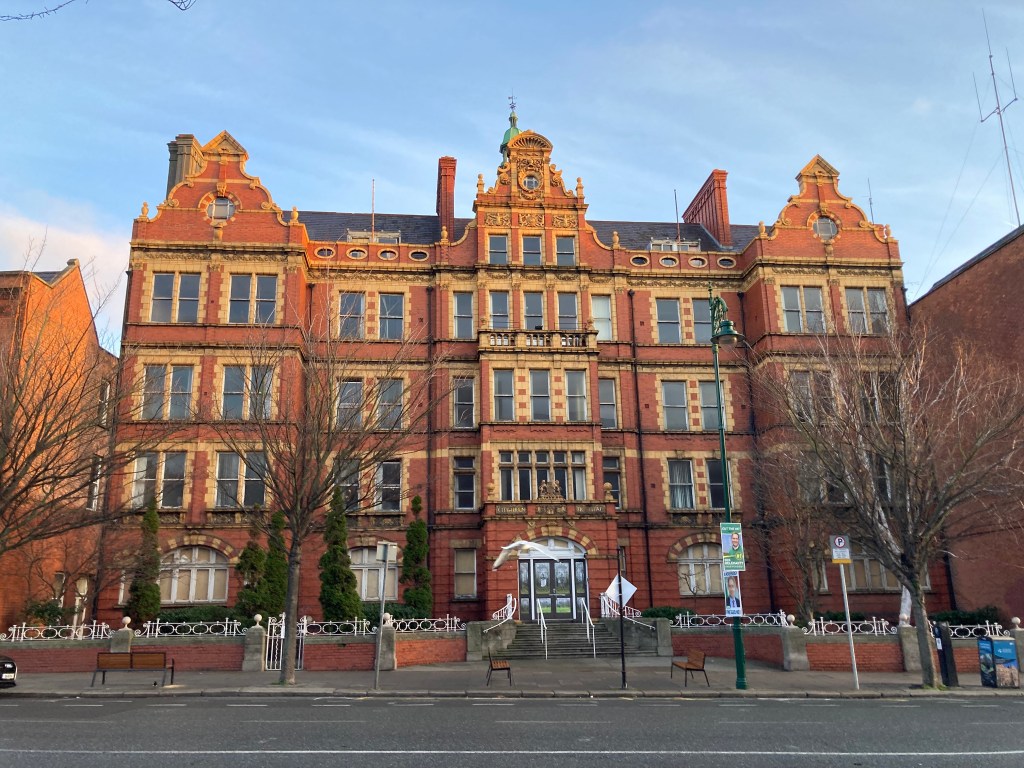
For me, this building – the Baggot Street Hospital in Dublin, Ireland – represents a pivotal period for me in my anti-racism journey. As a newly qualified social worker I worked there on Ireland’s team for separated children seeking asylum.
As I look back to that period from where I now stand, I feel like I knew nothing about race or racism. I hadn’t learnt about it at home, in school or in university and my recollection is that race, racism and anti-racism were not spoken about during the work I did there, a fact that seems astonishing now. Yet, while those words weren’t used, I nonetheless learnt a huge amount there, knowledge and experiences that were to become formative in my development as a person, and as an anti-racist social worker and researcher.
Primarily, I learnt from the amazing children and young people whom I met. Young people who were witty, bright, ambitious, grateful and ungrateful, sad and happy, excited, annoying, determined, lonely, fun, vulnerable, resilient, traumatized, strong, independent and dependent. They also happened to be Black young people, from many different African countries. Through the privilege of working with them, through the very limited service we provided, in the context of totally inadequate care provision (the children and young people were living in hostels without care staff), I learnt about their cultures and countries. I became more aware of our shared humanity, regardless of colour. I certainly tried to be ‘culturally competent’ but probably often wasn’t. I never considered myself to be racist in my work, but it’s likely I sometimes was. For certain, the system under which we worked was racist: The care provided to these children and young people was far inferior to the care provided to white Irish young people in the care of the state. We knew that, and tried to fight it, but I probably didn’t fight it enough.
But that experience and the many children I met at Baggot Street Hospital has stayed with me and it shapes my commitment to anti-racism now. Getting to know those children and young people gave me a passion to learn more about working in a culturally conscious way. From there, I started to read more and learn more, and focus more on race, racism and anti-racist social work practice.
In recent times, when Ireland has been struggling to accommodate those seeking protection, particularly young men, the Baggot Street Hospital – which now lies empty – has often been suggested as a location where asylum seekers could be accommodated. That has not happened. Instead, many asylum seekers, probably including some separated children whose ages have been disputed, live in tents on the streets near-by. Sadly, anti-refugee sentiment has grown and systems are still racist. This highlights more than ever the continuous need for anti-racist learning and actions within social work and beyond.
Title: Burnt Toast
Code: BH05

I chose a piece of burnt toast, both to represent a visual image of racism but also to symbolise the damage and long-term consequences of racism.
This is what the image represents for me in relation to racism:
1. Burnt toast is difficult to eat, but some people may be left with little choice, for a multitude of reasons. Likewise, some people must live with enduring impact and trauma of racism. It serves as a reminder of the negative impact racism has on individuals and society, leaving a bitter taste and impacting the quality of life for those affected.
2.The differences between the burnt and unburnt areas on a piece of toast can also represent the disparities and inequalities / inequities that exist between different racial groups in society.
3.The damage is irreversible. Once toast is burnt, it cannot be unburnt! So whilst the intention may not have been to burn the toast, the impact means that it is burnt.
4. Although I have not felt the pain from a fire, I have of racism, and it hurts. People struggle to come back from fire – being burnt and when they do the effects are long-lasting.
5. It can also represent missed potential preventing communities from thriving and reaching their full potential. An unburnt toast represents nourishment, while burnt toast, which in some instances may be thrown away, reflects how people who face racism can be treated, or how they feel being othered and therefore society misses out on their potential.
Title: Silhouettes
Code: BH06

I selected a common type of clip art I increasingly use to depict different concepts. I converted to clip art some years ago when I noticed that public domain pictures too frequently used Caucasians as their role models or who they seemed believe represented particular concepts. Clipart such as what is attached provides an excellent medium to depict diversity and inclusion.
Title: White doors
Code: BH07
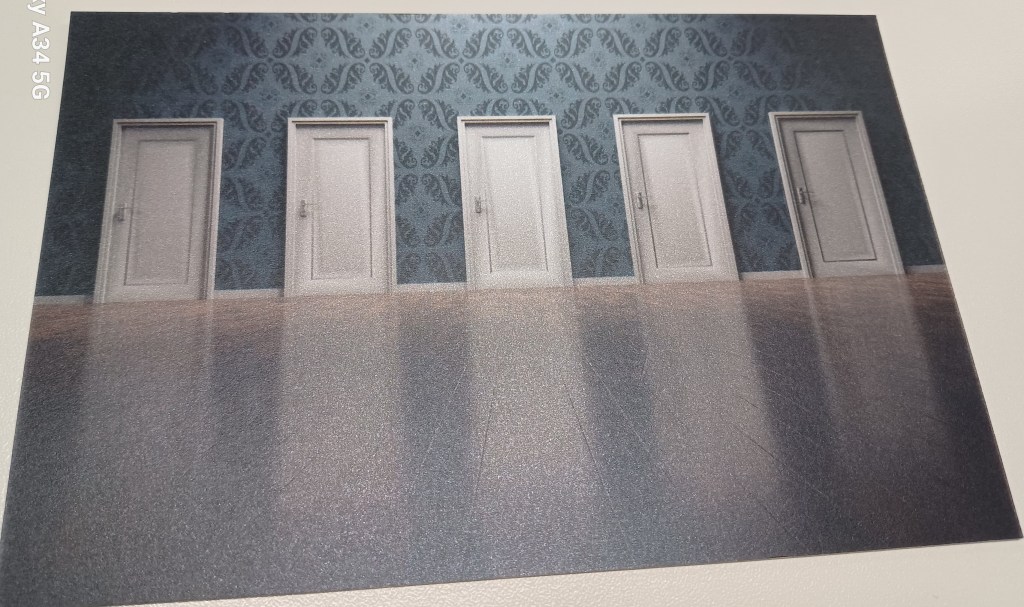
The White Doors That Hinder My Path!
As I grew up, I was told by adults, teachers, etc.,
‘That behind every door is an opportunity waiting, or every door is a door of opportunity…open it, walk through it. Your destiny awaits!’
Guided by my faith, I was led to many doors. Stepping through was my choice—a free-will kind of belief. Through the door waits a better career, promotion, or something new, different, better—my destiny!
However, upon reflection, I now see they are locked doors for people like me, regardless of what I hope for. It is guided and patrolled by White norms, and those norms are what I must live up to.
The doors had gatekeepers who obstructed my access. Sometimes, one has been slightly ajar, and I peeped through to see what awaited. I thought, ‘No way, I’m not ready for that’. Others, I fear, will never open for me. Not just me but people like me – Black people with Black consciousness, Black pride, and Black hope!
I went through a few of those doors. However, it felt like a tight noose around my neck, attempting to constrain my ability to fully embrace my Blackness and stay through the door as me. It is a constant struggle, as we (Black people) are just people. Yet, the difference of Blackness is always seen at the door, before our ability and talents.
The White gaze is like a spotlight that enjoys my energy and takes advantage of my knowledge, skills and creativity, but I must be careful not to show my Blackness too much. Try to assimilate and ‘be like us’ – to fit into the Whiteness, as if my Blackness is something I can shed at the door, a taboo that I must leave outside?
It is frustrating to be trapped in stereotypes that leak out occasionally…
• No, I’m not aggressive. I’m passionate about this topic.
• No, I’m not so and so from that team – we don’t all look the same!
• No, it is not normal for Black parents to beat our children. Is it normal for White parents?
• No, you can’t touch my hair. I don’t like it, and I don’t know you or where your hand has been and
• No, some, (but not me 😊), can’t dance!
The list could go on. I’m exhausted.
These racist ideologies are carried to the workplace. Given the predominance of White women in social work, whenever I confront these issues, your White fragility often hinders my efforts to educate. I become concerned when I pull you up on something you have said that is racist. That White gaze (as I know that you can use tears and cry), you did not mean it that way; it will be my fault, and I am being aggressive!
There exists a White hope that I will conform to the norms and be more like them than myself. However, I fight to be genuinely accepted for who I am, just as I accept them. I see their ability and creativity and understand that they are individuals with good, bad, and indifferent, which coexist and occupy the same space, making them complete. Why can’t they see that about me, about Black people?
There are some White people around me, White people who make me see things differently and make it easier to navigate those doors. Some actively seek to unlock them, inviting us in and working to clear the path. I feel fortunate to have these allies, but once through the door, the White gaze constantly reminds me that I must perform and be more than flexible and, at times, double-jointed.
These white doors should be dismantled, becoming doors of opportunity for everyone. Don’t repaint or disguise them; instead, they should be entirely removed, allowing us to walk through as our authentic selves.
Yet, once through the door, we face the glass ceiling!
Title: Brown Eyes
Code: BH08
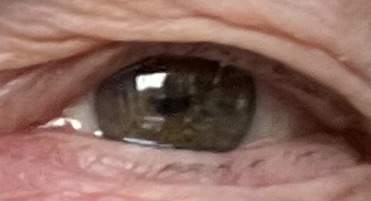
Many years ago, I participated in a Conference workshop that had a profound and lasting impact on me. As we approached the door to the room where the workshop was held, we were prevented from entering the room until we had been allocated a part of the room in which we must sit. We saw people ahead of us being pointed in one direction or another and we had no idea how the allocation was being judged.
Once the workshop began, the facilitators presented a number of questions and invited us to respond. I found that when I responded the facilitators were warm and affirming, listened to what I had to say and engaged with me. This was also true when those around me responded. It made us feel very valued and rather important. However, when those in the other part of the workshop room tried to join in, they were ignored or given cursory, cold replies, sometime they were even belittled. It was a really uncomfortable experience.
How were these two different groups determined? Well, one group (the one I joined) was brown-eyed and the other was blue-eyed. Most of my group were people of colour and most of the other group were white. It was doubly interesting and complex for me, as a white person in the ‘brown group’.
The facilitators helped us all to debrief from this experience and I won’t share the details of this, but just to say that what everyone shared in common was how completely arbitrary the treatment (whether warm or cold) was experienced and – for the blue-eyed group who often take their relative privilege for granted – how belittling and demoralising it was. I hadn’t heard the term micro-aggression at that point, but now I know from experience what that meant, as well as the awfulness of being judged not for who you are but what you are deemed as looking like.
When I look in the mirror and see my eyes, I remember that moment of judgement many years ago, and the learning that I took from it.
Title: Union Jack
Code: BH09
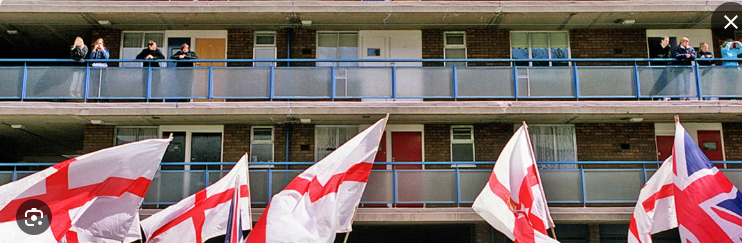
My object is in fact the Union Jack as held by the National Front party in London. Encountering the national front as a teenager was my first covert experience of racism. Their chant, ‘there ain’t no black in the union jack’ still rings in my ears. The feeling of hostility, anger and hate are ever present for me. I have learned that as I have moved away from my council estate in South London and moved on into Higher Education, that the same hostility, anger and hate exists, but it is shrouded in something very different. So, although no one would display these images now, they are still present for me.
Title: Person on Beach
Code: BH10
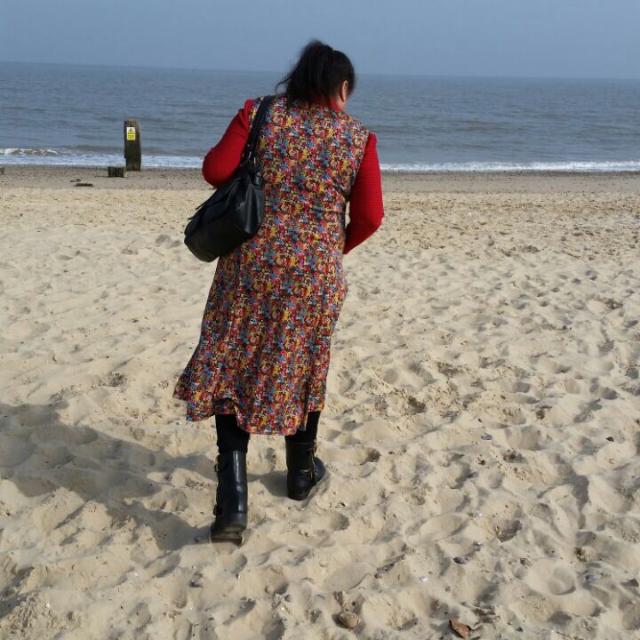
Isolation. Portrayed by all the footprints around but the people are invisible. They are unknown to me, and I to them.
Title: Glasses
Code: BH11
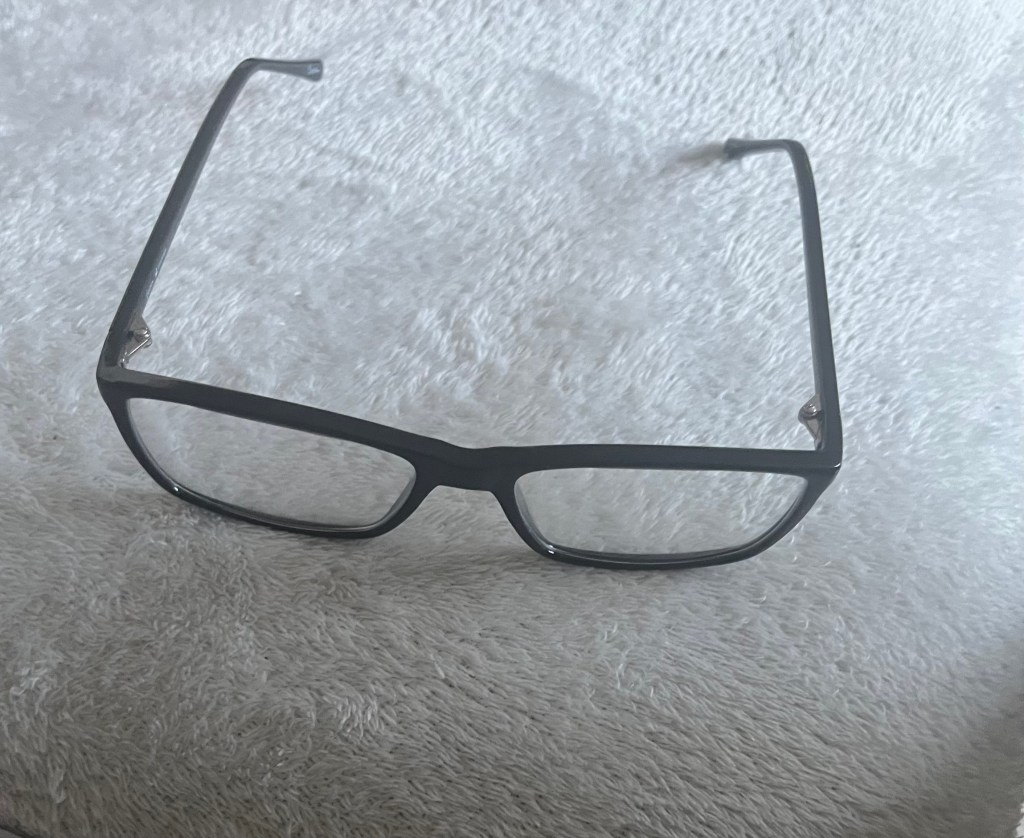
These glasses visualise the fact that as a black African woman, I cannot unsee my race and the experiences of covert and overt racism I encounter in daily living. Race and identity are of course intrinsically linked and it is impossible not to notice where my voice and contributions are not valued or taken on board in different work environments and with the different stakeholders I engage with. It is always a conscious effort to ensure that my views are explored and incorporated into decision making as the only black member of my current team. In the same vein, these glasses also represent anti racism approaches in that once I have seen my views/perspectives being side lined or not being promoted, I advocate for inclusion and promotion of marginalised voices like mine. Whilst mine may be the minority voice, it does not mean that it is the least important. I use the role I have to influence anti racist, anti-oppressive and anti-discriminatory approaches which are authentic and meaningful to the individuals they are intended for. There are a lot of tokenistic interventions/approaches and I endeavour to generate discussions which are more impactful to daily living. I have lived experience of racism and experiencing micro aggressions based on my race. I therefore always aim to challenge othering and promote equitable processes in our work as a team. Simply put, my reflection on these glasses is they help me to first ‘see’ or observe racist/discriminatory/oppressive and secondly identify strategies for promoting anti-racist/anti-discriminatory/anti-oppressive responses to start providing potential solutions or improve experience. When I ‘see’ racism I must then act to facilitate anti-racism stance.
Title: Knife
Code: BH12

This is a kirpan. Prior to moving to London and meeting my Sikh partner, I would have called this a knife and believed it to be a weapon, possibly used by young black males in gangs and street violence. That’s what mainstream media shows us. We aren’t taught enough about other faiths at school and so I didn’t know much about being Sikh or the customs. Although they are the ‘warrior’ faith, they are one of the most peaceful groups of people and have been persecuted throughout history. This object led to significant conversations with my partner about his faith and his experiences of racism. Just yesterday, after watching a documentary he told me that since the 7/7 bombings people still won’t sit next to him on the Tube as he is a brown man carrying a rucksack. I now know that the kirpan is a protected religious item and it is legal to carry one in the UK. I worked in football recently and had to intervene in a situation where a steward tried to take a kirpan off a turban wearing ordained Sikh. So, this item more than most led me to talk and think about the experiences of racism which people endure, and I have sought to be more of an ally in the community, both reaching out to others warmly but also to challenge any discrimination or racism and seek to educate people.
Title: Lanyard
Code: BH13
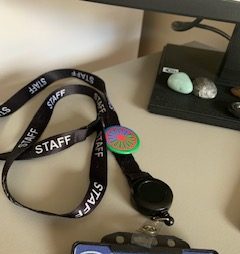
I am sharing my staff lanyard on which I always wear a Romani flag pin badge. I wear this as an act of resistance, as a powerful statement of cultural pride, identity, and resilience. It not only reflects who I am, but also represents the broader heritage, history, and struggles of the Romani people. By wearing this badge, I am contributing to creating a more inclusive university environment, challenging stereotypes, and promoting greater understanding among peers and students.
In educational settings where people of many ethnicities, racialized cultures, identities and perspectives converge, wearing symbols of my ethnic identity creates visibility, a sense of belonging and self-worth. This is especially important for a Romani in higher education as Romani and Traveller people have the lowest inclusion rates of all. Having experienced anti-gypsyism as a student and also a staff member, my Romani pin badge gives me courage and feels like a defence against the racist slings and arrows I encounter as I try to forge a path in an environment where we still are not made to feel welcome, or that we have a right to be in.
For many students who are minoritized and racialised, university should be a safe environment where they can be their authentic selves. By wearing my Romani badge, I’m inviting curiosity, which can lead to conversations and spark questions that offer an opportunity to share my story, breaking down stereotypes and educating others on the richness and diversity of Romani history and culture. In this way, I can act as an ambassador for the Romani people, helping to change attitudes and reduce experiences of racism.
In environments where Romani students are underrepresented, seeing a lecturer proudly displaying their ethnic identity can be empowering. It signals that they are not alone and will make it easier for them to connect with me and feel a greater sense of safety.
I know all too well the impact of antigypsyism in educational spaces, including universities. By wearing my Romani badge, I choose to take a stand against these stereotypes. I demonstrate that Romani people are as ambitious and capable as any other person and that we contribute meaningfully to society and academia.
I hope that wearing my Romani badge is also a way to advocate for greater institutional support for minoritised and racialized students and staff. When students/staff visibly identify with underrepresented groups, universities are more likely to recognize the importance of supporting them. This might lead to more authentic widening participation and diversity policies/action, including increased resources, events, scholarships, and support networks for Romani and other minoritized and racialised students. Being present and visible in my university can also highlight the need for a decolonized curricula that acknowledges the systematic, state sanctioned violence experienced by Romani people and drive imperatives to also decolonize curricula through an anti-gypsy lens.
Wearing my Romani flag in badge in university is more than a personal statement; it’s a meaningful act of resistance, pride, solidarity, and advocacy. It serves to honor my cultural heritage and ethnic identity, educate others, and contribute to a more inclusive campus where all identities are equally respected and valued.
Title: Broken Mirror
Code: BH14
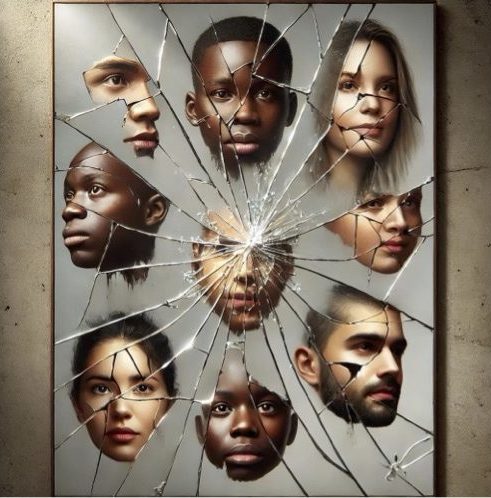
Here is the visual representation of the cracked mirror concept, the faces reflected in the cracked mirror represent individuals whose identities are fractured by systemic racism. The cracks symbolize how different individuals, based on their race, may experience oppression in unique ways. Different cracks for different experiences. A Black client may face structural racism, oppression, injustice differently from an indigenous person or someone from an Asian background. The mirror reflects these different realities, each crack showing a different pattern of harm.
This cracked mirror also symbolizes the process of anti-racism. It is about acknowledging the cracks, understanding how they were formed, and working to mend them. Anti-racism requires continuous effort to address the damage, challenge structures of oppression, and create a more inclusive, honest reflection of humanity.
Social work, which ideally seeks to support all individuals, can unintentionally contribute to these distortions if practitioners fail to acknowledge the racial biases embedded in systems of power and oppression.
Title: Magnifying Mirror
Code: BH15
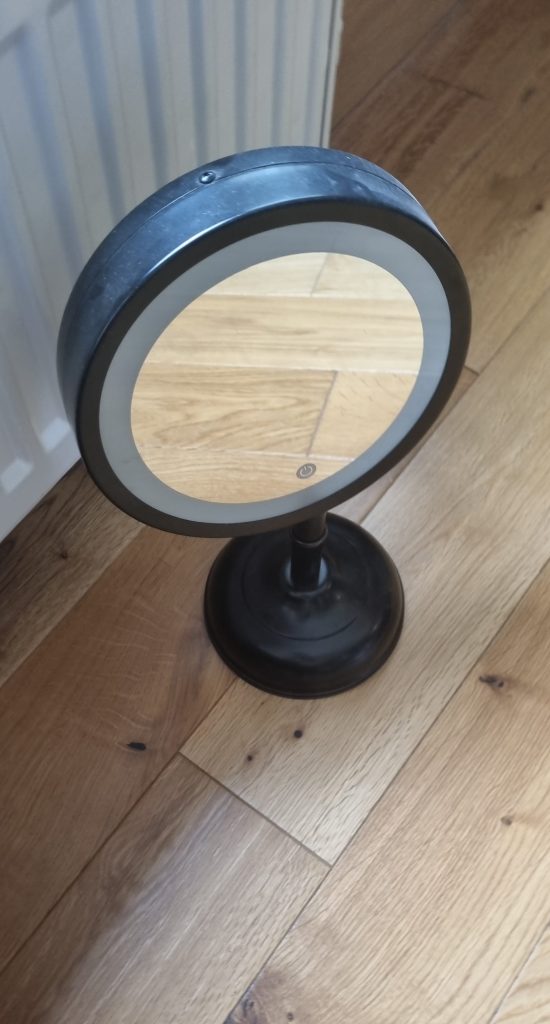
This is a light up magnifying mirror – but look how dusty and dirty it is! I asked for a make up mirror for a Christmas gift one year. When I looked in it then every aspect of my face was magnified and with the light shining it gave me a view of myself that I just didn’t want to see. I decided ‘never again will I look in that mirror!’ As a white person, I wonder whether we look at ourselves in enough depth to really explore our own role in racism. It is painful to think that we might be racist. It’s easier not to look! For my birthday I was bought a different kind of mirror, because I’d not been honest with the person gifting me the mirror, they thought that they had got me the wrong kind of mirror since they noticed that I’d never used it. That one stayed in the box! But that also reminds me of the need to be honest with others. We all need a space where we can be honest about our feelings and experiences of racism. As a white person I am aware of the trauma that racism creates and so sometimes I don’t know where I can share my thoughts in a fully honest way, as I don’t want to say ‘the wrong thing’ and I don’t want to add to the trauma that people have experienced. I know that I need to look more in depth at racism and anti-racism, but I’m not sure how, so just like that magnifying mirror maybe I avoid it? I recall many years ago early in my career I spoke to a Black student about how she might experience racism on placement, and I asked her how I could best support her with this. I wanted her to feel that she could talk to me about race and racism. I think I was very clumsy in the conversation but I tried. Later when I spoke to my manager about the conversation he said ‘you can’t do that it’s racist. You should have never pointed out the difference’. We don’t need a mirror to see difference but maybe we need people to hold up mirrors so that we look at ourselves in more depth. Perhaps I will clean off that dust!
Title: 100 Dollar Bill
Code: BH16

Hundred dollar bill. I have been a fundraiser for over 20 years. The biggest issue at the intersectionality of my work in philanthropy, social work, and policy change is financial support. It is incredibly challenging finding long-term, sustainable, significant funding for social work research and initiatives around key topics like racism and discrimination.
Title: Wokerati Mug
Code: BH17
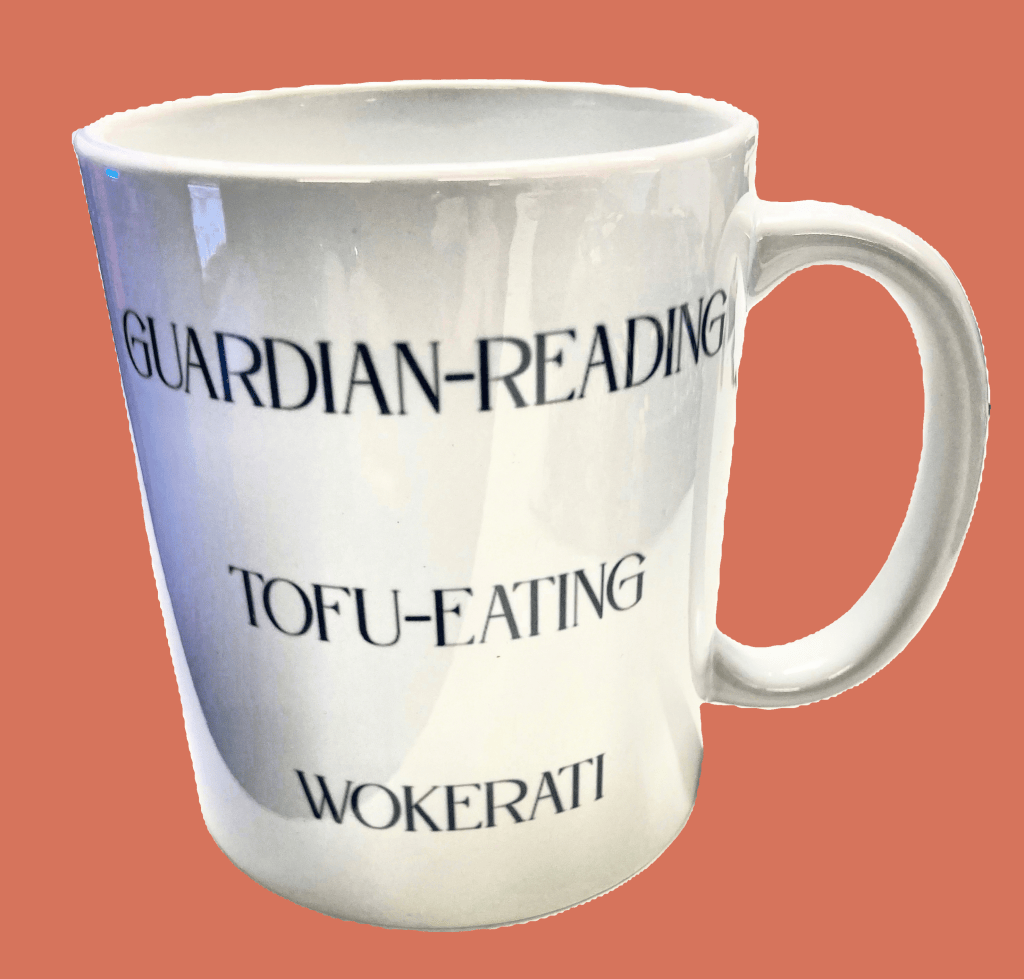
On the 18th of October, the UK Conservative Home Secretary, Priti Patel, claimed that those who opposed her proposed public order Bill were ‘Guardian reading, tofu-munching, wokerati’. The next day she resigned. My friend’s son sent me this mug some weeks later. I am all of those things, I read The Guardian, a left leaning newspaper, I like tofu and yes, am proud to be ‘woke’ and challenge discrimination and oppression.
The term ‘woke’ was largely unknown in the UK, until the Black Lives Matters Campaign. In 2017 it was added to the Oxford English dictionary and described people who were left leaning and progressive. It was also used as an adjective, i.e., to be alert to injustice in society, especially racism. It has since been used by those on the political right to attack and denigrate those who have different views of the world. It has become an insult, a way to attack individuals and groups. It has also evolved into a term to describe something superficial or actions that are insincere.
I chanced upon a radio programme that explored the origin of the term woke. It is an African American colloquial word for awake, and the phrase ‘woke’ or ‘stay woke’ meant become aware of, literally, woken up, and sensitive to the issues of justice and social injustice. The word has a long and important history, dating from 1938, where its first recorded use, ‘best stay woke’ appeared in the lyrics of a song by Lead Belly, ‘Scottsboro Boys’ which described 9 black men wrongly accused of rape in Alabama in 1931. The term was used by Martin Luther King in the 1960s civil rights speeches and in 2008, Erykah Badu in her song ‘Master teacher’ used the refrain ‘I stay woke, so stay woke’. She also used the term in a tweet to support the Pussy Riot, a Russian punk group who were convicted of ‘Hooliganism’ for protesting against Putin. The term became more widely known during the 2014 Ferguson riots in the USA and was further used by Black Lives Matter activists.
From an ill-judged speech in parliament, to opportunities for increased mug sales, the origins of words, their meanings and their changing meanings remain important to reflect upon. Social workers must therefore reflect on their language they use, as the words in current parlance today might be the slur words of the future. My mug is also a message of defiance, a statement of social work values, a kind gift from a young person, whose Father has been a model of standing up for what you believe in, ‘staying woke’ and encouraging others to ‘wake up’, despite the consequences, both personal and professional. My mug could be seen simply as a humorous gift, but for me, it is more complex. It is a symbol of both racism and anti-racism, a simple but important act of defiance and not least, when it is filled with coffee, it helps ensure I stay woke.
Title: Newspaper
Code: BH18
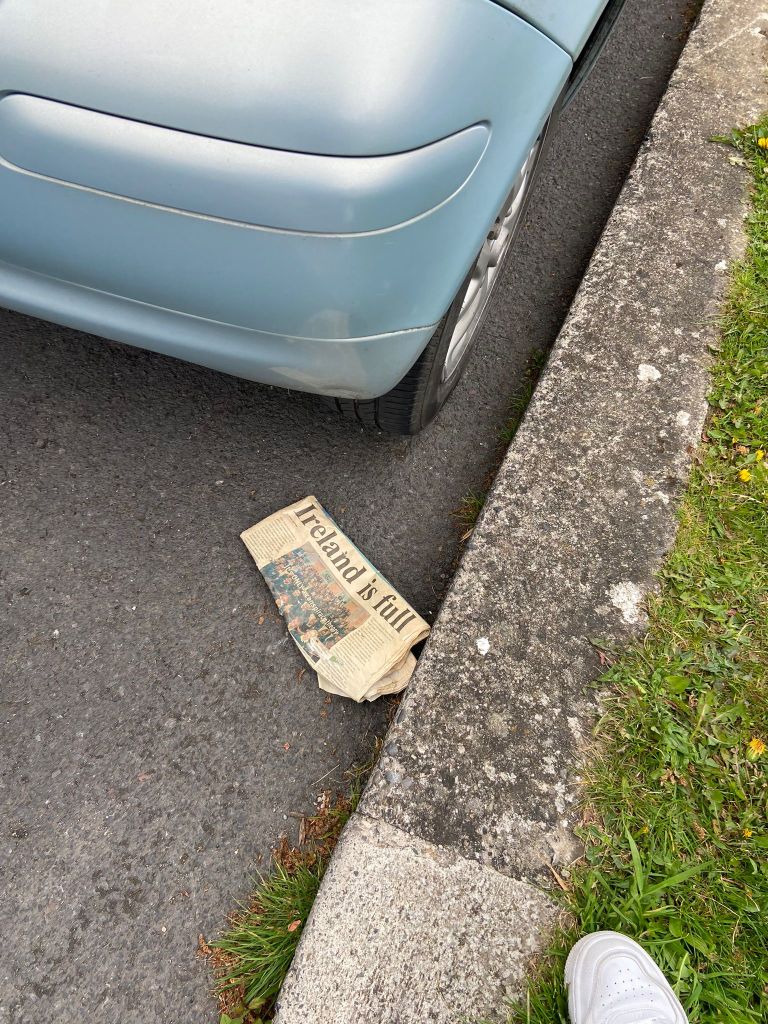
The photograph shows a newspaper heading that was left beside my car when I was at a home visit. As a social worker who has faced racism firsthand, I am all too familiar with the hurt and frustration that such blatant discrimination can cause. The headline’s use of racial slurs and derogatory language in the newspaper headline coincides with the slogan commonly used by the far right to perpetuate harmful stereotypes and reinforce systemic racism. This singular act is an example of the racial violence that non-White individuals experience in Ireland. It is also a clear example of the kind of discrimination and prejudice that we as social workers must work to eradicate at practice, education and policy levels.
As a social worker, I have dedicated my career to helping individuals and communities overcome the challenges they face, including those related to racism and discrimination. The incident is a reminder that racism is a pervasive and insidious form of discrimination that can manifest in various ways, from overt prejudice to subtle biases.
Title: Mice in Letterbox
Code: BH19
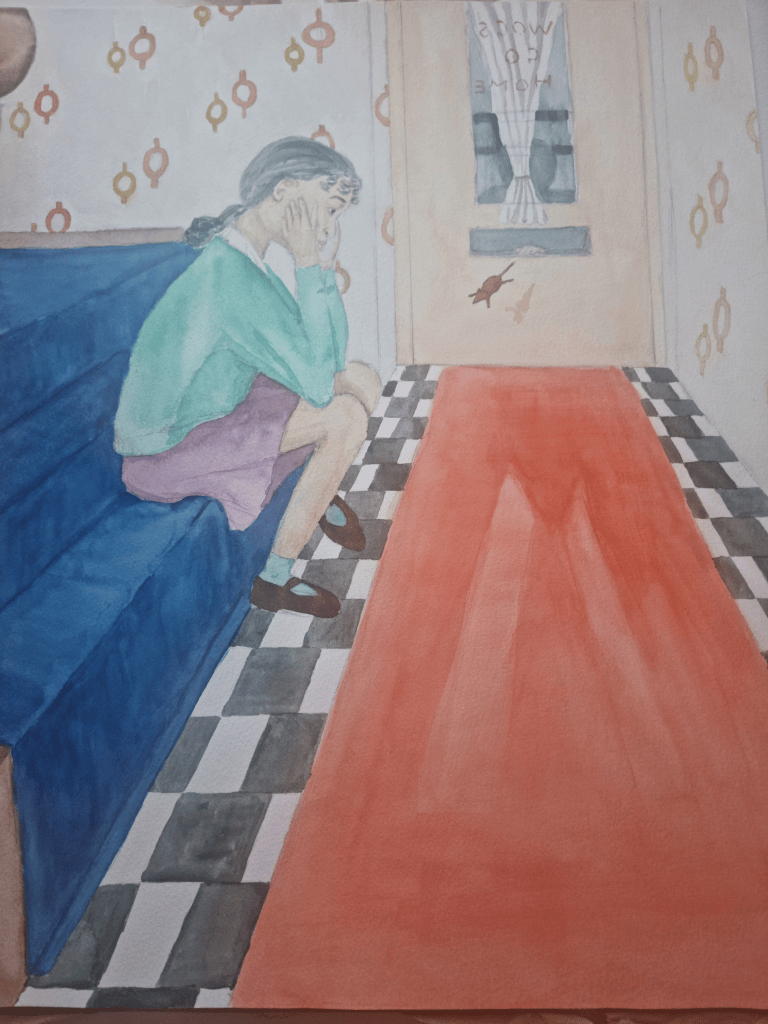
Painting of early years experience of Racism growing up in Tottenham in the 1960s.
We were the first black family to move into the estate in Tottenham and faced high levels of racism. Starting with a petition to stop us moving in to mice being put down our chimney, chewing gum being put on our locks, my dad being beaten up twice times in front of us as children. The painting depicts the sense of hopelessness and sadness of my younger self with graffiti daubed on our window and a mouse being put through the letter box. A sense of isolation, and of feeling trapped. Not wanting to be there and yet not having any way out. The impact on one’s self image and the trauma of those experiences can not be over estimated.
Title: Laptop and Pen
Code: BH20
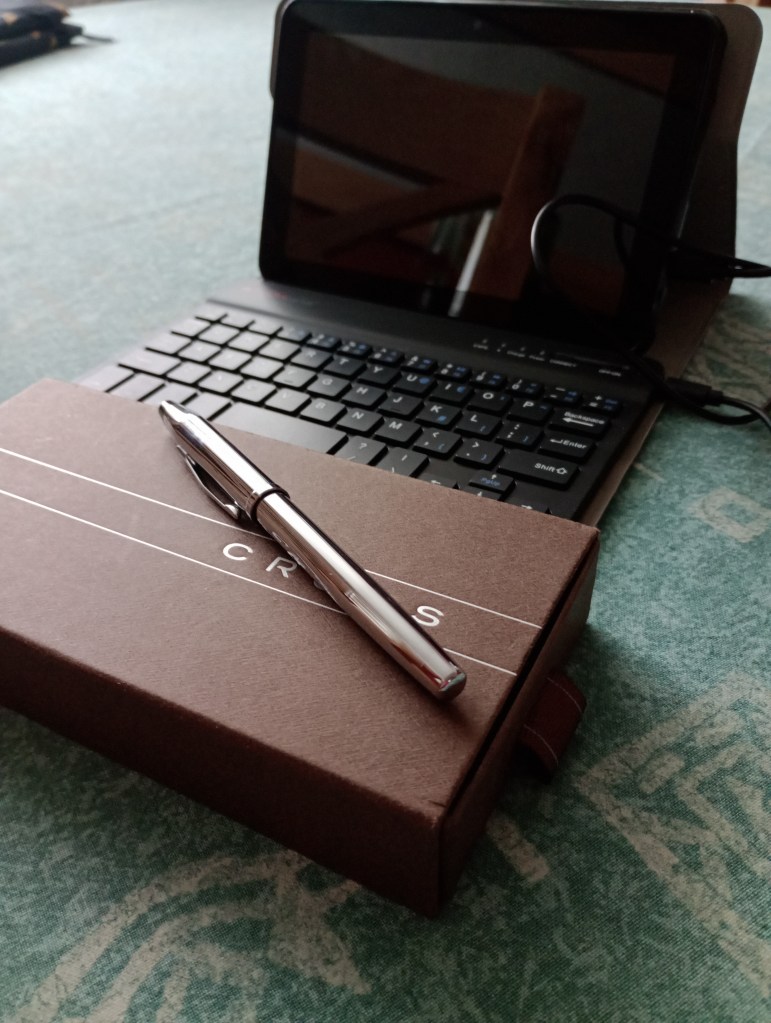
Pen Vs screen
When we sit to write a letter, we stop, we think, we compose what we would like to write. Whether it be a gratitude, compliment or a complaint, we have time to pause our thinking to slow ourselves down to respond and then time to further reflect as we take the letter to the post box. There is still time to not send, to read it again and to amend.
With tablets/phones it’s instant, in the haste of a situation you just reply. This may be an inconsiderate comment, sharing a meme without fully understanding how it may be perceived or how it may affect the receiver. Instant teleology can get in the way of articulation and reflection, taking things out of context. Not thinking about the offense something you share may cause, what the hidden meaning behind a symbol is or how uncomfortable you have made someone feel. Online people hide behind not seeing a reaction, not being present or being an annoyance responder. This can lead to widespread racism being normalised ‘a meme’s ‘a joke’ but without realising the impact on others.
Title: Pen
Code: BH21

I grew up hearing ‘the pen is mightier than the sword’ but never quite understood what that meant or indeed how this could be possible. As a mature female of Black African heritage, I now totally understand this saying in relation to racism and anti racism.
We read things with racist connotations everyday, and some of these are written with the intention of isolating and dehumanising people. The ‘might’ of the pen therefore can be seen as being able to offend, undermine and insult. This same pen can be used to write peaceful, friendly, respectful and human words and phrases, devoid of racism and racist language. Some people use their pens to intentionally or unintentionally perpetuate stereotypes, microaggressions and bias.
Writing can be a powerful tool to combat racism by fostering empathy, challenging stereotypes, and amplifying marginalised voices. Through essays, stories, and articles, we can share diverse perspectives, humanise experiences, and highlight systemic injustices. Writing can also educate readers by dismantling harmful myths and promoting inclusivity. By carefully choosing language, avoiding stereotypes, and advocating for equity, we can use our pens shape public discourse and inspire change. Publishing and promoting work by underrepresented voices further helps to break down barriers. Ultimately, writing offers a platform to spark conversations, build understanding, and create a more equitable and anti-racist society. I know how I am using my pen and my writing- my question is, how are you using yours?
Title: Quilt
Code: BH22
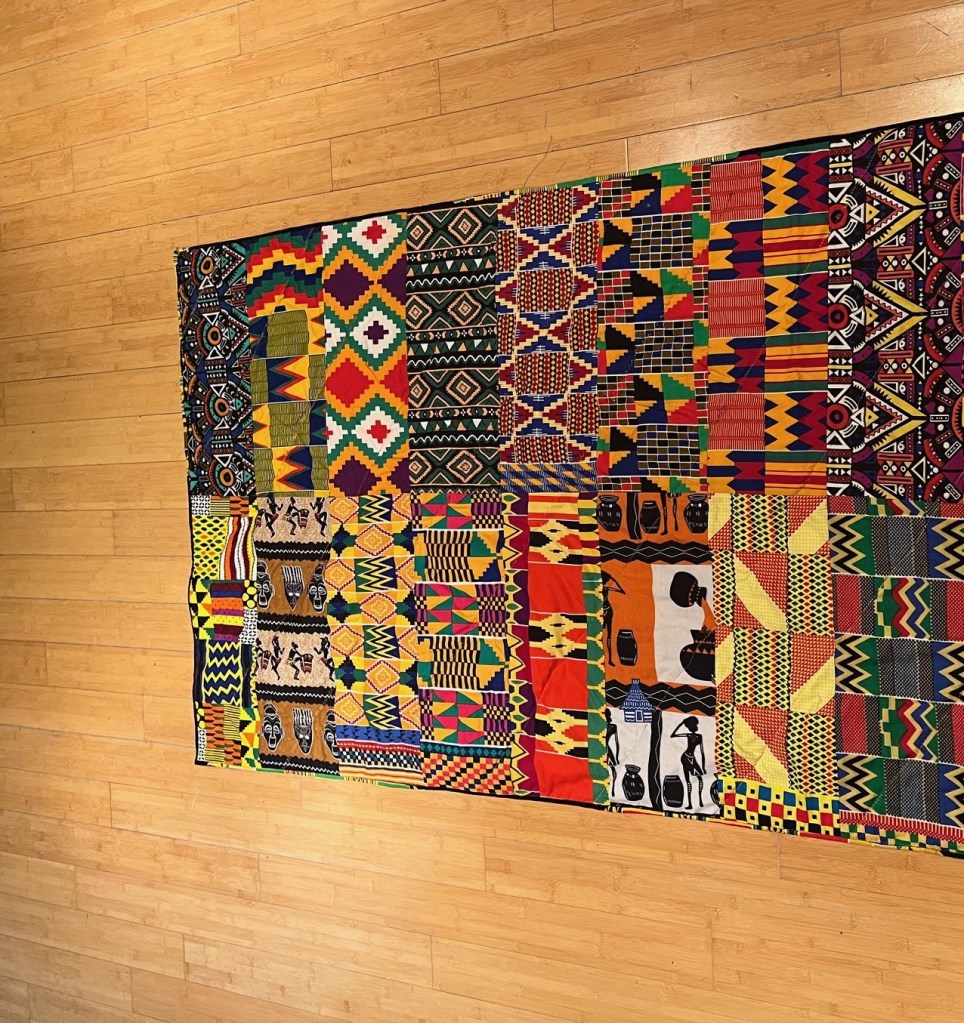
One of my hobbies is quilting, I made this in the office. The office was very cold both physically and emotionally, it was a hostile environment so the quilt which denotes my desire to connect with African as someone who descends from Africa via the Caribbean. It is my outward fight of resistance and rebellion.
Title: EU/Non EU Refugees
Code: BH23
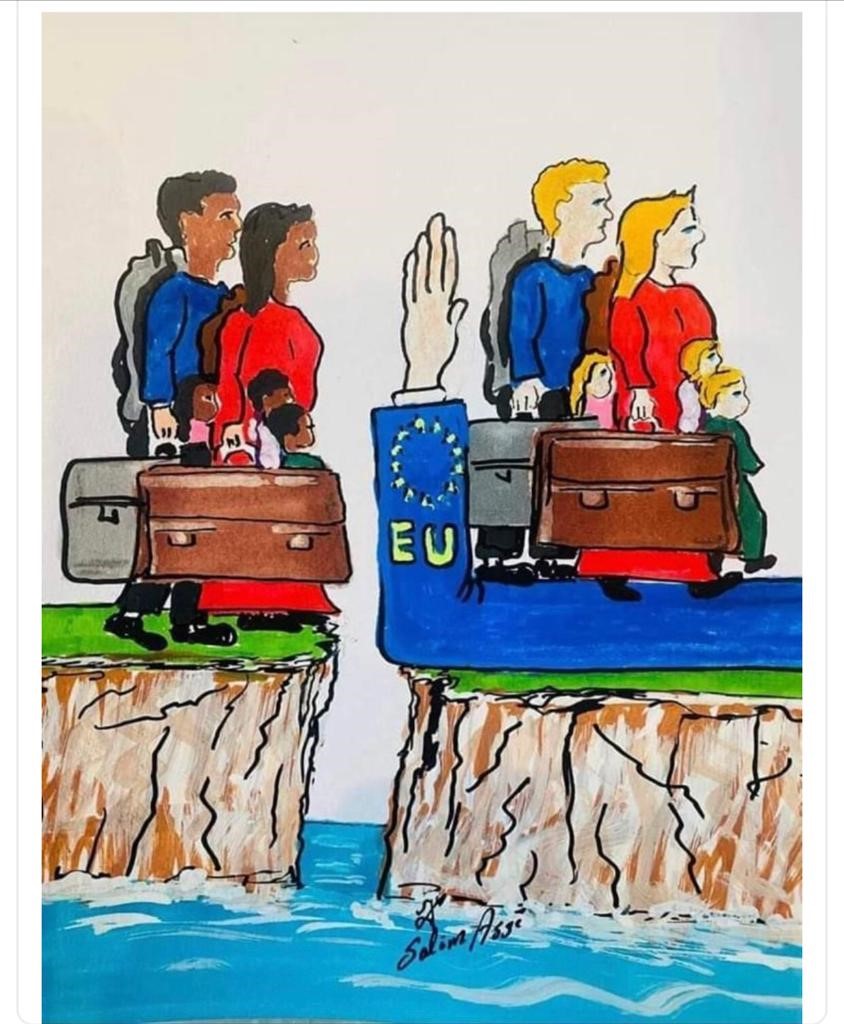
This powerful visual about institutional and structural racism. It shows the unequal treatment of refugees at the borders of Europe during the early stages of Russia’s 2022 invasion of Ukraine. The image depicts two groups of refugees standing at the edge of a cliff separated by a gap. In the centre, an arm representing the European Union (EU) is raised in a gesture of ‘stop’. On the right, a white Ukrainian family is allowed to continue across the bridge into Europe. On the left, a Black family carrying similar suitcases and children is prevented from crossing, despite facing the same danger. Both families are portrayed as refugees fleeing conflict, yet only one is perceived as deserving of protection. Compassion was extended selectively rather than universally through systems and institutions. A painful reminder of institutional and structural racism.
Title: White Rose
Code: BH24
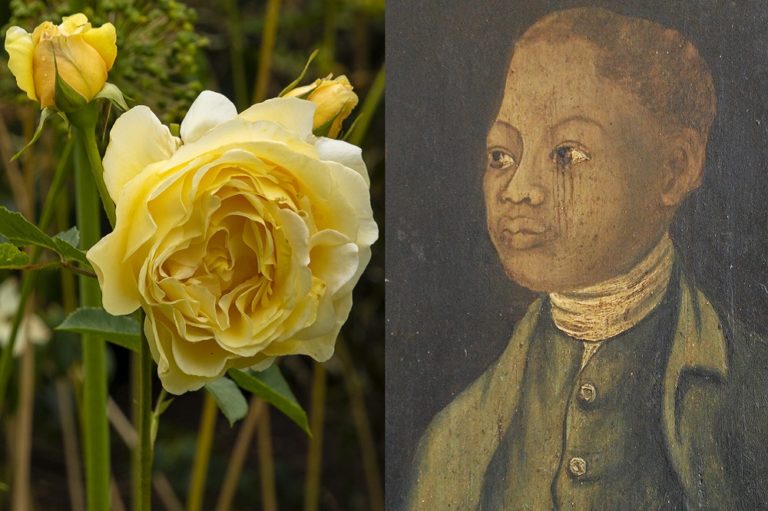
Wales has been slow to recognize its colonial and imperial entanglements. Indeed, the Welsh have always thought of themselves as the subject of internal colonialism, racism, and domination by their English neighbour. At the same time, Black British history itself has been slow to recognize the presence of Black people in the rural landscape. The story of John Ystymllyn (1738–1786), locally known as Jac Du (Jack Black) aptly illustrates these historic omissions. The story of this humble gardener begins with an enslaved boy being gifted to the Wynn family and put to work on their Ystymllyn estate in Criccieth. The record tells us he was considered primitive, that he needed ‘taming’ and could only speak a ‘babble’ when he first arrived, illustrating clearly Welsh racist attitudes of the time. Jac was christened with a Welsh name and learned to speak both English and Welsh. As a skilled gardener and craftsman, he was much admired and his marriage to a local girl goes down in history as the earliest recorded mixed-race marriage in Britain. The couple had seven children, five of whom survived and their descendants could be found in north Wales up to 2019.
This is a story of both integration and of racial discrimination, of visibility and of invisibility, of recognition and of disavowal. Jac had his portrait painted, he had a respectable christening and burial, he was clearly admired and gained his independence and standing as a member of the Welsh community.
In 2021, Zehra Zaidi, a campaigner discovered that no horticultural rose had ever been named after a British person of ethnic minority heritage and she successfully lobbied to establish a new variant named the John Ystymllyn rose. This yellow rose, representing friendship, community and tolerance was planted in the rose garden in Buckingham Palace in 2022 with a welcome statement by the late Queen Elizabeth.
I select this rose as emblematic of the Black presence in the rural landscape of the UK. I grew up in rural Wales with all the contradictions that must have faced Jac Ystymllyn. As a social work academic and activist, I researched, wrote, lobbied across my career to gain recognition for the issues of rural racism and Black rural identities and to get the broad range of Black histories included in our school curriculum in Wales. Today Wales leads the way as the only one of the four nations of the UK to have mandated Black history in the school curriculum and to be working towards the government led ambition of an Anti-Racist Wales by 2030. Plant the John Ystymllyn rose in your garden as a symbol of hope!
Title: Rubik’s Cube
Code: BH25

Its a Rubik’s Cube. I chose this image as it reflects different aspect of my identity such as race, culture, background, experiences and how I navigate in personal and professional aspects. Each piece fits, my journey involves balancing different roles in my life as a manager at work striving to foster an inclusive team where every worker feels included and have a sense of belonging. Whilst at home as a parent, I have to teach my child about racism, empowering them with strategies to address such remarks calmly and assertively and aiming to create a future generation that not only stands up against racism but does so with dignity and poise.
The Rubik’s Cube can look chaotic and disjointed, similar to how I feel at time that there is a lack of understanding and acceptance. But when I have put in the effort to turn and twist, learning about each piece and how it fit together, I have felt enlightened, I start to see the bigger picture. Diversity is about recognising the unique value of each piece. Racism tries to force pieces into places they don’t belong, disrupting the harmony and creating frustration.
For me, antiracism is the deliberate work to rearrange and align these pieces, respecting their differences and finding how they can coexist beautifully. It’s a challenging process, but with patience and soldiering on, each piece of my life, though different, contributes to a greater whole reflecting the effort I need to solve the puzzle and create a cohesive, vibrant whole.
Title: Social Work Textbook
Code: BH26
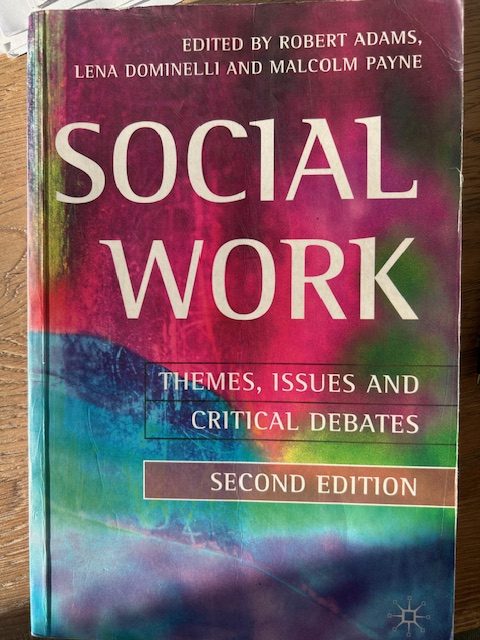
This is a picture of my core text book from social work training. It was published in 2002. That book has 410 pages and none of them cover racism in social work education or towards social work practitioners. My core teaching did not educate me about the importance of being a reflexive social worker, understanding how my upbringing, experiences, knowledge, attitudes and beliefs can influence my perception of other people in terms of racism. Although it references racism, it relates specifically to the racism experienced by service users. This textbook did not prepare me to recognise and address my own racist thinking or approaches and it did not equip me to reduce racism as a social work practitioner. It has been a long time since I graduated and I now teach social work students. Frequently, I see and hear racist and prejudicial comments about students from educators. If I am being honest, I am sure I have made some of these comments and thought some of these things along my journey also. As I prepare the next generation, I am not confident that the new social work textbooks address the importance of educators addressing their own biases and embodying anti-discriminatory teaching. I think they should. If the environment where students learn does not emulate the behaviours we want to see in future social workers, then we are not practising what we preach. We need to start having difficult conversations.
Title: Staple Set
Code: BH27
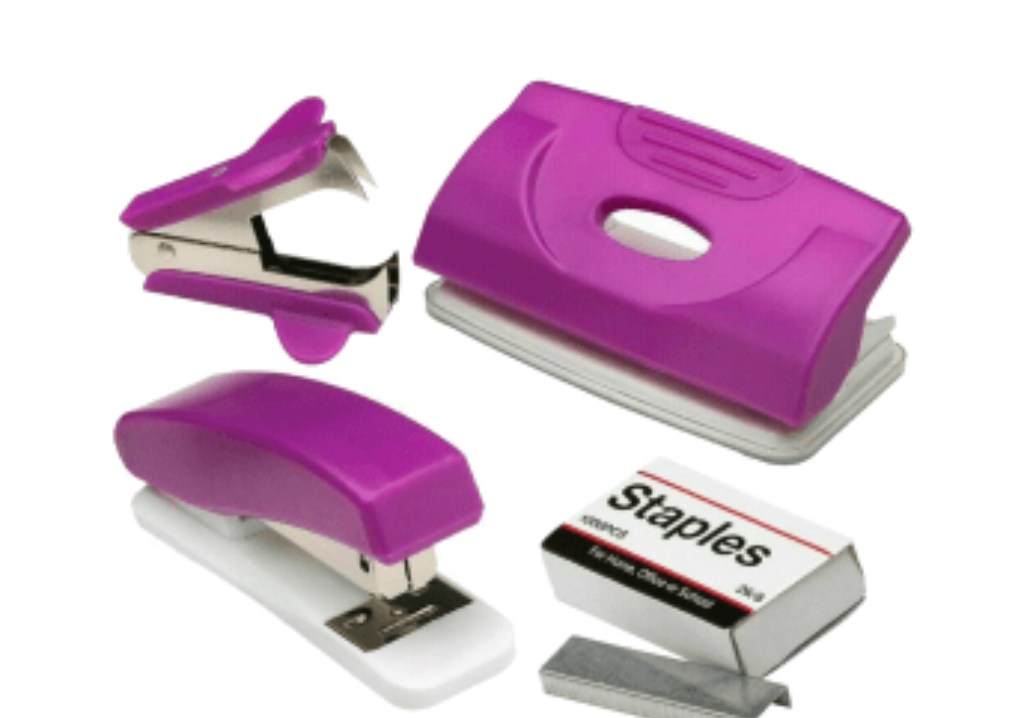
Stapler: In social work, the stapler symbolises efforts around social work values to work with diverse communities and foster cohesion. Sometimes there are efforts to ensure cultural humility and cultural sensitivity. This is social workers stapling cultural differences to their own diverse or individual cultures. However, like removing staples with a staple remover, systemic racism dismantles these efforts, leaving fragmented and disconnected progress. So the Staple Remover, for me, represents the persistent undoing of small advances in anti-racism work that perhaps not everyone in the organisation is making but it could be a small select of committed people. Similar to removing staples, systemic racism erases incremental progress, leaving scars and discouraging sustained commitment to change. For me, the Punch: signifies the deep wounds inflicted by institutional racism on Black and minority communities. These wounds are enduring and often leave lasting damage, symbolising the need for ongoing systemic change to address the profound impacts of racism. I wish I could say I’m seeing the staple pinned against antiracism and cultural humility without the punch or staple remover but sadly not.
Title: Statue
Code: BH28
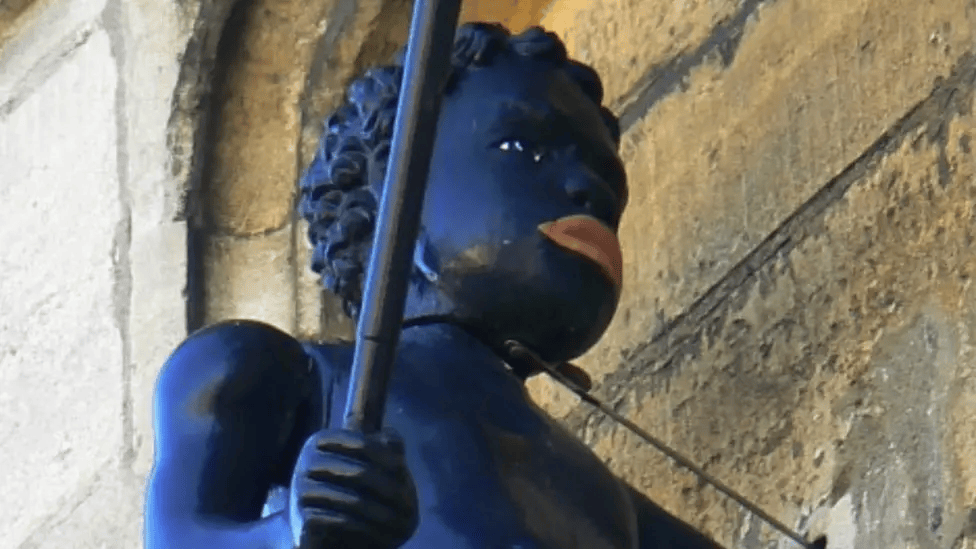
This object of black boy on a clock in Stroud came under intense focus post George Floyd, Black Lives Matter protest and when a number of statues, monuments objects came under sharp focus. I recall the debate that they should remain to remain people of racism from British history and others mainly like myself thinking that they should be removed. Not sure whether was eventually removed but serve as an example of how others can be subjective when to come to symbols of oppression and the power of it.
Title: Ubumumtu
Code: BH29
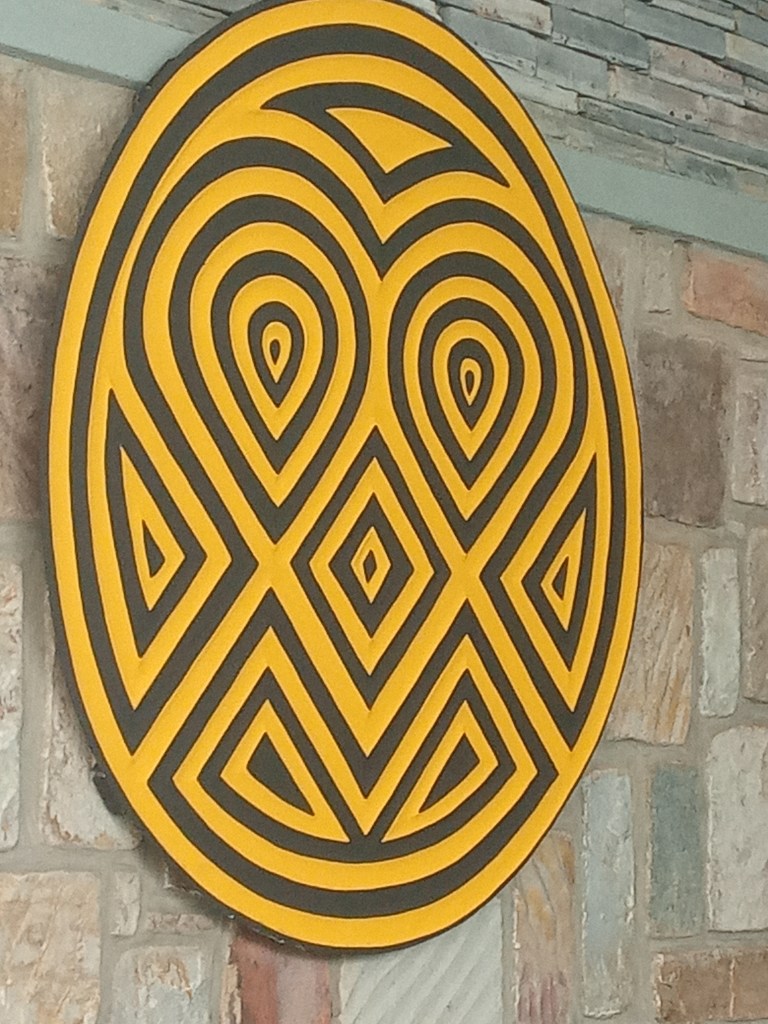
This is Ubumuntu the international sign of humanity. It a photo taken at the genocide museum in Rwanda. Ububumutu (a form of Ubuntu), a has been adopted by Rwanda as it’s symbol for recovery post genocide. Ubuntu (& Ubumuntu) have become such central parts of not only my work, but the way in which I live my life since being on my anti racism journey. Ideas of collectivism, and community inherent in Ubuntu inform so beautifully the way forwards with an authentic anti racist approach, and this has helped me enormously to develop my thinking and how to be in the world of racism, and anti racism as an evolving ally. I am humbled by ideas of forgiveness, reparation and restoration inherent in Ubuntu philosophy. Seeing those ideas implemented ìn practice, for example in post apartheid South Africa, gives me a template to help me navigate my anti-racist practice. The global majority south has eldership and wisdom to help inform our global north next steps… if only we allow ourselves to authentically listen… There in lies the challenge.
Title: Miners’ Tin
Code: BH30
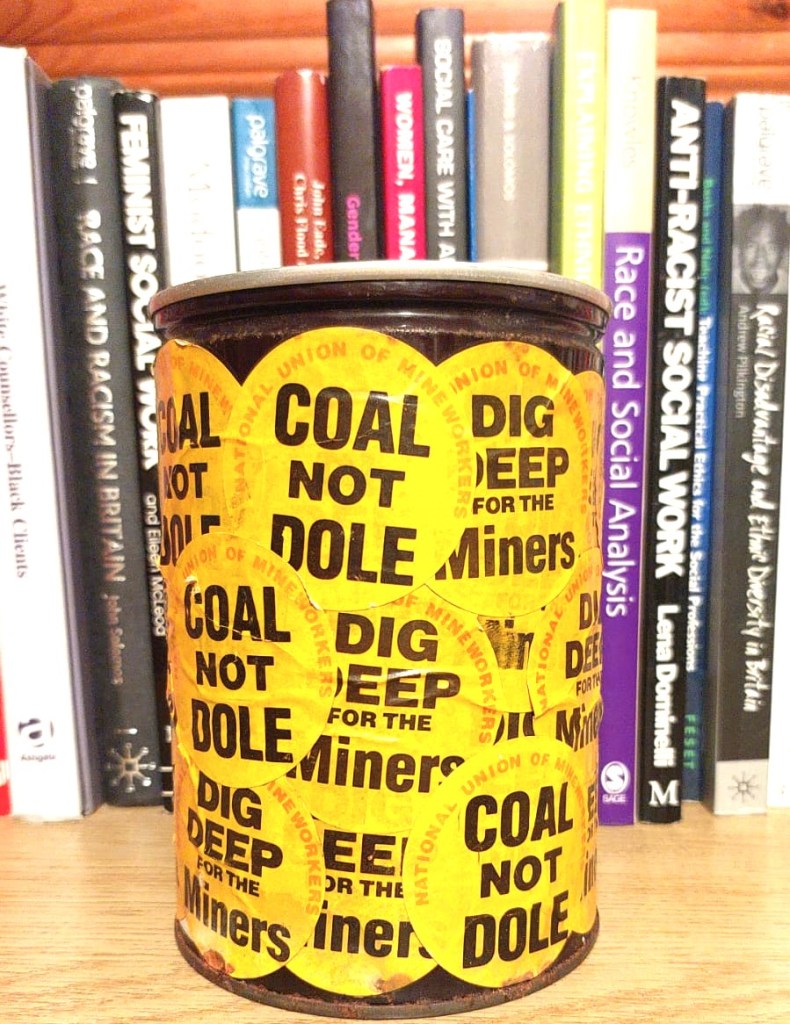
My miners’ strike collection tin which I used use of shake on the street corners of Foleshill Road in Coventry was a pivotal moment in my political awakening and my understanding of racial and social justice, Standing with white working class miners and their families and shaking my tin to collect community donations from the Asian community where I resided emerged as a profound moment of my understanding of solidarity and collective resistance.
My tin became a symbol of unity and how Black and white people can unite to speak back to power. My tin highlighted the intersection of class struggle and racial solidarity across diverse Black and white communities and how there were allies who recognized the interconnectedness of our struggles and were prepared to stand with me and my community. My collection tin taught me that effective resistance to entrenched power requires grounded action that unites disparate groups around shared principles of justice and equality. Through my tin I found a sense of solidarity and hope. It was an enlightening experience that helped me understand that the pursuit of racial equality is deeply intertwined with broader movements for social justice. It underscored the importance of finding allies and building coalitions across different communities to challenge systemic inequalities. In this way my miners’ strike tin became an lifetime artefact which has grounded me in collective action and solidarity in the fight against oppression.
Title: Trousers
Code: BH31
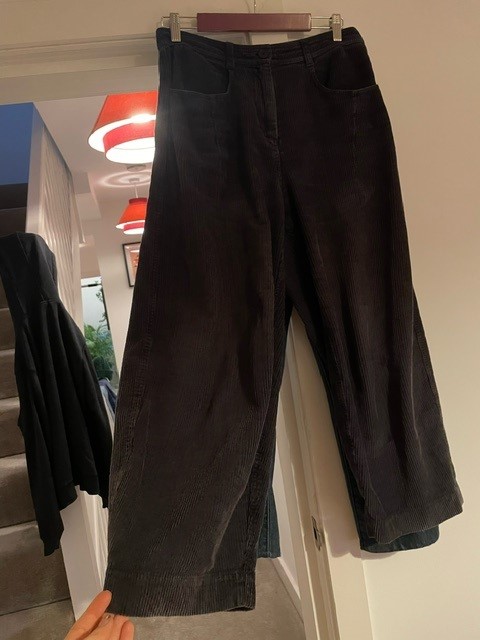
This is a pair of trousers, which are mine, from Toast. They cost £135. I am a researcher researching safeguarding responses to extra-familial violence affecting young people. I’ve recently been in touch with a grass-roots community organisation about partnering with them on some research. The focus of the research is need and resource for young people impacted by extra-familial violence. Figures in the UK currently suggest that racially minoritised boys and young men are disproportionately impacted by extra-familial violence, and young people living in areas that have been under-invested in and where rates of poverty are high. The grass-roots community organisation I have approached works primarily with racially minoritised, working class people in a particular area of the UK, they do work around violence prevention but also about building bridges between people and services. I am hoping to work with them to explore some of the mismatch between the resource, support and services people feel they need, to prevent violence and build safety around young people in the community, and what is available. I was discussing the project with one of the staff members from the community organisation and they were telling me about the poverty local people are living with and how little funding the organisation has. We were thinking together about ways that the research could materially support the organisation and people connected to it, and not just come and go, like other research projects have, in an extractive way. After the call, I looked at my trousers and thought – these trousers cost £135. I can hear what this organisation needs, I can try to adapt the research project to make it as beneficial to them as possible, but there are undeniable realities about the researcher/researched relationship – that the project has been designed at a university, that I am not from the area, I am white and I am middle class. I am worlds away from the experiences of those whose experiences I want to hear. I thought about my £135 trousers and how some young people that use the community organisations services only have one hot meal a day. I thought about how class and race play are playing out here in ways that I can see and feel and so many ways that I am blind to. We want to work together, I want to be careful with the research approach, and brave with it, using the platform we have as academics to call for change, but I’m also increasingly aware of being part of the problem. Being funded for three years to do a project about lack of resource in the youth sector, could the resource just go straight there instead? What is our role as anti-racist researchers in social work researching the lives and experiences of working class, racially minoritised people? How do we address not just the relational but material and economic inequalities perpetuated by research and ensure our research is part of a movement for racial and economic justice? I don’t have any answers yet but the questions are very present with me as I embark on the work.
Title: Wall
Code: BH32
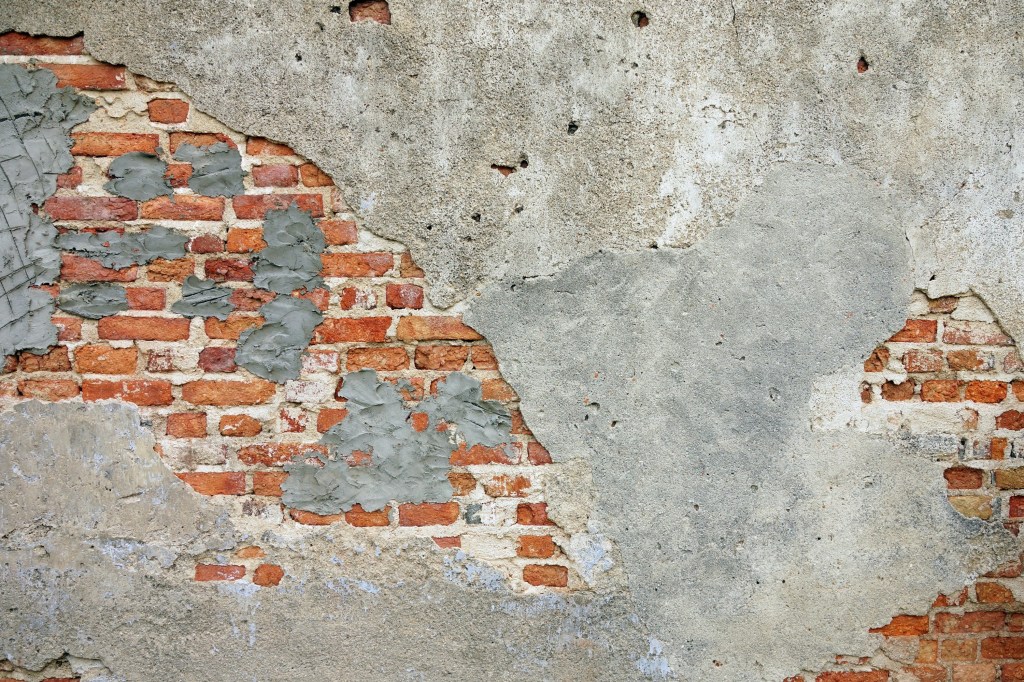
My object is a brick wall, which has some cracks and bits of plaster falling off, but is fundamentally solid, not budging. This is not particularly original but I hit it again recently and it has weighed heavily on me. I am privileged in that I do not experience racism, however I work in with and try to support social work students who do in my role as social work lecturer. I sometimes feel positive; we are making changes, improving policies, practices – challenging and calling out racism more than we have as a profession and individuals. But then I hit the brick wall, time after time and realise there may be the odd crack or bit of plaster falling off but little has changed in years and I feel angry and helpless – left wondering how the students impacted must be feeling if I feel this way. Very recently a Black student on placement described to me how their Practice Educator was behaving towards them. They described the over scrutiny, the undermining, the additional tasks and unrealistic expectations that are the hallmark of racism on placements and I hoped this time we would do things differently as an institution. However the reality was much the same – keep your head down, nearly done, eyes on the end goal….Yes I was able to get the student who was feeling vulnerable and loosing confidence rapidly a mentor, yes we ‘rallied’ round and challenged some practice, and yes the student did pass and…but we did not name it and there have been no consequences to date for the PE. How many more times, years, will this be so? How do we pull down the brick wall?
Title: Weighing Scales
Code: BH33

I chose a balance scale to show how I weigh my experiences. On one side, there is the oppression I sometimes face; on the other, there is the gratitude I feel for being here and doing meaningful work. I often let the gratitude side win, even when things are unfair. This object helps me reflect on how I minimise my own feelings to stay strong and appreciative.
It represents the mental balancing act I do—constantly weighing pain against my gratitude. Sometimes I might feel I don’t have the right to be upset because things ‘could be worse’.
Title: Sankofa Symbol
Code: BH34
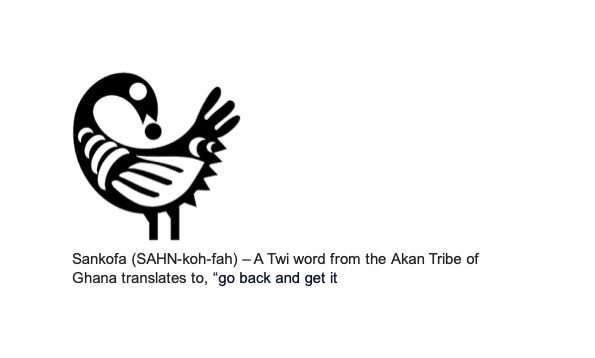
I selected an Adinkra symbol called Sankofa (SAHN-koh-fah) – A Twi word from the Akan Tribe of Ghana translates to, ‘go back and get it’.
The symbol became most important to me when I started researching the concept of decolonisation and why decolonisation is need in social work education as a counter to discrimination and oppression. This particularly centred on the dominance of Euro centric curricula and the silencing of other ways of knowing, being and doing in social work education including practice learning. I was also struck by the lack of Black people in leadership positions, this is very much needed for making real impact both in social work education and practice. The lack of presence have huge impact on decisions that affect Black lives. To give one example, research suggests just 41 out of 160 professors in the UK are Black women (HESA, 2023).
I was inspired by decolonisation scholar activities Mbembe and Le Grange who suggest decolonisation can helped Indigenous scholars to use Indigenous knowledge that have been lost. Sankofa in this sense helped me to review my ancestral knowledge. Sankofa (SAHN-koh-fah) translated as ‘go back and get it’. I have since used this as a pedagogical tool. I have since used other Adenkira symbol cards as teaching tools to help understanding of the continuing impact of colonialism, the silencing of other ways of knowing, being and doing in social work education including practice learning and the importance of including other ways of knowing, being and doing in social work education curricula including practice learning and education as an anti-racist tool. I’ve had different reactions from students some mostly positive, some have left the classroom inspired and others have left indifferent. Some have asked about where they can purchase the cards and used it in their teaching as practice educators. I have reflected on in so many ways and asked myself why it took so long to pluck the courage to use the symbol.
Title: 5 Women
Code: BH35
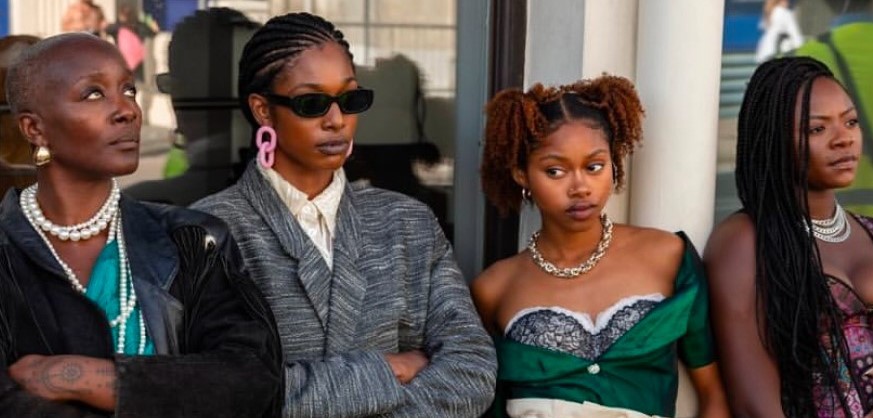
Following the planned racist riots and anti-racist protests in the town where I live, 5 young black women recreated a photo from the local papers of the 5 racist white men that showed up locally, to be surrounded by thousands of anti-racist protestors for the next 6 hours. I am proud to know one of these amazing young women. They did this to reclaim the narrative, reclaim the space. I know how much fear this caused, for the amazing and fierce young woman I know who is one of the women pictured. I know the struggle to voice that fear, all the joy and pain on seeing the anti-racist backlash against it. They didn’t experience it in person as the fear prevailed, but all the footage and images and support meant a lot. My other black friends and colleagues felt the same, but we have sent them all the joyous anti-facist singing and dancing of thousands, when we turned up on the 7th of August 24 in force, pride and joy. I love this image. It is power and beauty personified. I worry about the present and the future, a lot. In the run up to the 7th of August, I despised the fascism that was all over the streets of UK – but I knew that no matter how many fascists tried to gather on the 7th of August in the town that I live, we’d be many, they’d be few. I was more concerned by the fearfulness of my family members and some of my white friends. As a white person, I needed, wanted, had to be one of the people to show that racism has no place in our lives, on our streets. I was concerned that other (white) local residents would feel like my family – stay at home, avoid potentially violent situations. I need not have feared – there were far more people who felt like me, who had to be there. There was music, we chanted, we danced. Anti-fascists patrolled the streets, determined to ward off any dispersed racist attacks. All was as I knew it would be and should be. Being able to reclaim and hold space for anyone who can experience racism is and remains important. I wish we didn’t have to continue to do this, but we shall. It builds communities. While we were barely acquainted, P. (the amazing young woman in the photo), started talking about all this and it connected us in a very powerful way. For now, the racists were defeated on the day, and our anti-fascist community grew stronger and more connected. The fight continues, but it is worth it and it makes anti-racist bonds grow and become stronger. So the significance is that it reminds me of community, connection, resistance, joy, and hope. All the best things in life. In my mind’s ear, this memory is also always soundtracked by Ezra Collective’s ‘God gave me feet for dancing’ – and that day, dance we did.
Title: Arms Linked
Code: BH36
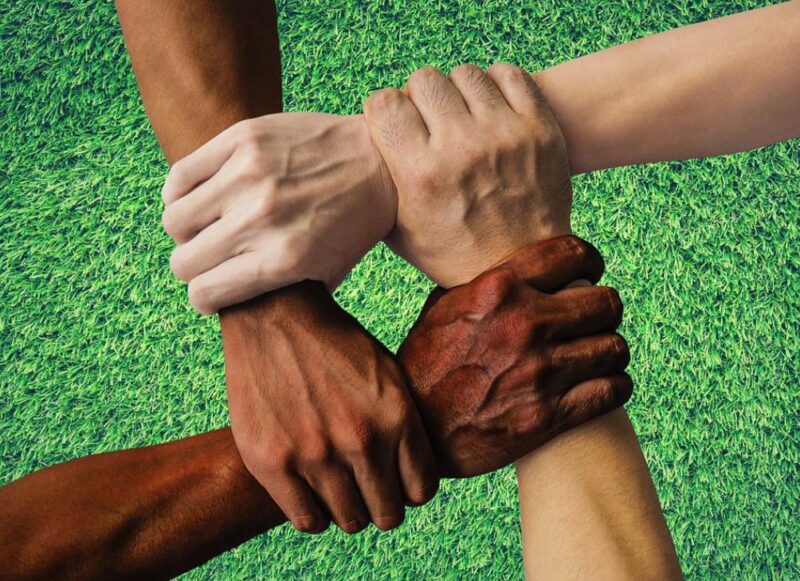
Unity in diversity
Title: George Floyd & Chains
Code: BH37
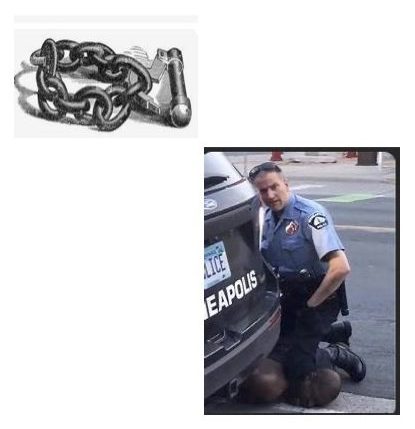
The 2 images I have uploaded which I believe work together represent Racism white supremacy and white privilege to me. Chains symbolize the historical and ongoing restrictions imposed by white supremacist structures to oppress, control and kill Black people. The murder of George Floyd further exemplifies the persistence of white supremacy today, a force that continues to marginalise and silence other voices.
Title: Bees & Honey
Code: BH38
I chose the honeybees to represent Anti-racism because:
1.Anti-racism is a verb, it requires action, and bees are always ready to immerse themselves in action. They are crucial pollinators and facilitate the growth of flowers and plants. In the same way anti-racism requires people to take action to change thinking and behave and act differently to contribute to a society where everyone could flourish.
2. Honeybees work together – they operate within highly organised colonies where each bee plays a specific role for their future survival and successful outcome. To combat racism everyone needs to come together and work together for this outcome.
3. A bit like the curb cut effect, the role of bees in ecosystems highlights the interconnectedness of all living things. This emphasises that the fight against racism benefits the whole of society, not just marginalised groups is important.
Title: IASW Strategy
Code: BH39
IASW Anti Racism Strategy – Continuing the Journey: The next phase of anti-racism initiatives in Irish social work. This strategy provides us with a tool and written document to fight against all forms of racism within social work profession. It is a step in the right direction to eradicate racism from our society.
Much more action is needed to keep the work going to promote anti racism within social work. I could relate and could go back to the strategy when looking for guidance to address certain issues.
Title: Uniform
Code: BH40
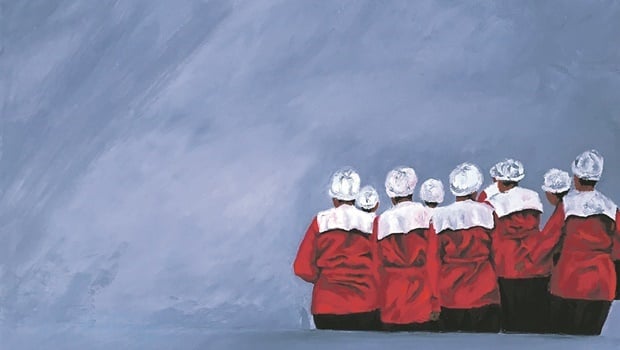
During my time as a Christian in Africa, I witnessed segregation within the Methodist, Anglican, Roman Catholic, and Baptist churches. There was a noticeable division between African and white congregants, with each group wearing distinct colored uniforms to differentiate themselves. This practice overlooked the exclusion of disadvantaged individuals and was enforced by white leaders who did not wear uniforms.
Contrastingly, in the UK, there is no dress code for members of these churches. Additionally, there were instances where representation from the black community was expected at network gatherings. Discrimination was evident in the selection of delegates, favouring privileged individuals of a particular economic status within the church, resulting in injustice and inequality.
Reflecting on this, I see how church uniforms are viewed as an integral part of religious identity., however, I question the necessity of such identification within places of worship that pride themselves on being inclusive and nonjudgmental in Africa and not in the Western world. I also challenge the unconscious bias that led to injustice and inequality, creating a power imbalance and limiting opportunities within the congregation.
Title: Blank Newspaper
Code: BH41

As a faculty member in the United States, I see the classroom as an important space for helping future social workers move beyond simply talking about diversity and inclusion to critically examining how racism, power, and inequality are produced and reproduced in everyday life. One activity that has become particularly powerful in my teaching is something I call ‘The Blank Newspaper‘.
At the beginning of the semester, I ask new social work students to identify the three newspapers or news sources they read, trust, or encounter most frequently. A few weeks later, I ask them to return to those same sources and identify stories or headlines that reference race, ethnicity, nationality, immigration, or other aspects of identity. They bring these examples to class and work in small groups to examine the language used, whose voices are centered, whose voices are absent, and how particular individuals and communities are represented.
The patterns are often striking. Stories involving racially minoritized communities are frequently framed through crisis, criminality, threat, deficit, dysfunction, or controversy. Students begin to see that racism is not always communicated through explicitly racist language. It can also operate through framing: which stories are considered newsworthy, which details are emphasized, whose behavior requires explanation, who is portrayed as belonging, and who is repeatedly constructed as a problem or an outsider.
I then ask students to do something more difficult than simply critique what they have found: rewrite it. They rewrite headlines and, where appropriate, sections of the stories using language that retains the facts but restores dignity, context, complexity, and humanity. This is an important shift. Students move from identifying problematic discourse to actively practising an anti-racist alternative.
We repeat the activity throughout the semester across a range of social and embodied identities. However, the exercise on race consistently generates some of the strongest emotions and most sustained discussion. In the current U.S. political climate, amid intensified challenges to DEI initiatives and growing anxiety among many minoritized communities, the exercise has taken on even greater significance. It has become one of my core teaching tools for demonstrating that racism and anti-racism are not abstract concepts. They are present in the everyday stories, images, words, and narratives through which we are taught who belongs, who matters, who should be feared, and whose experiences are worthy of empathy.
For social work students, this matters profoundly. Social workers do not enter practice untouched by the narratives they consume. Media representations can shape assumptions about families, neighborhoods, immigrants, racialized communities, poverty, crime, disability, gender, and deservingness. Developing an anti-racist social work practice therefore requires students to learn to notice these narratives, interrogate them, and resist reproducing them in assessment, documentation, decision-making, and professional practice.
Perhaps the most powerful evidence of the activity’s impact comes much later. Over the years, students have told me at graduation that the exercise permanently changed the way they consume news. Some have written directly to newspapers to challenge harmful or dehumanizing representations. Others have stopped subscribing to or purchasing publications whose reporting they now recognize as consistently reinforcing stereotypes.
For me, that is the purpose of the Blank Newspaper: not to tell students what to think, but to help them develop the critical consciousness to notice what they might previously have passed over, question what has been normalized, and recognise that anti-racism also involves deciding which narratives we challenge, which we refuse to reproduce, and which we choose to rewrite.
Title: Mother & Baby Statue
Code: BH42
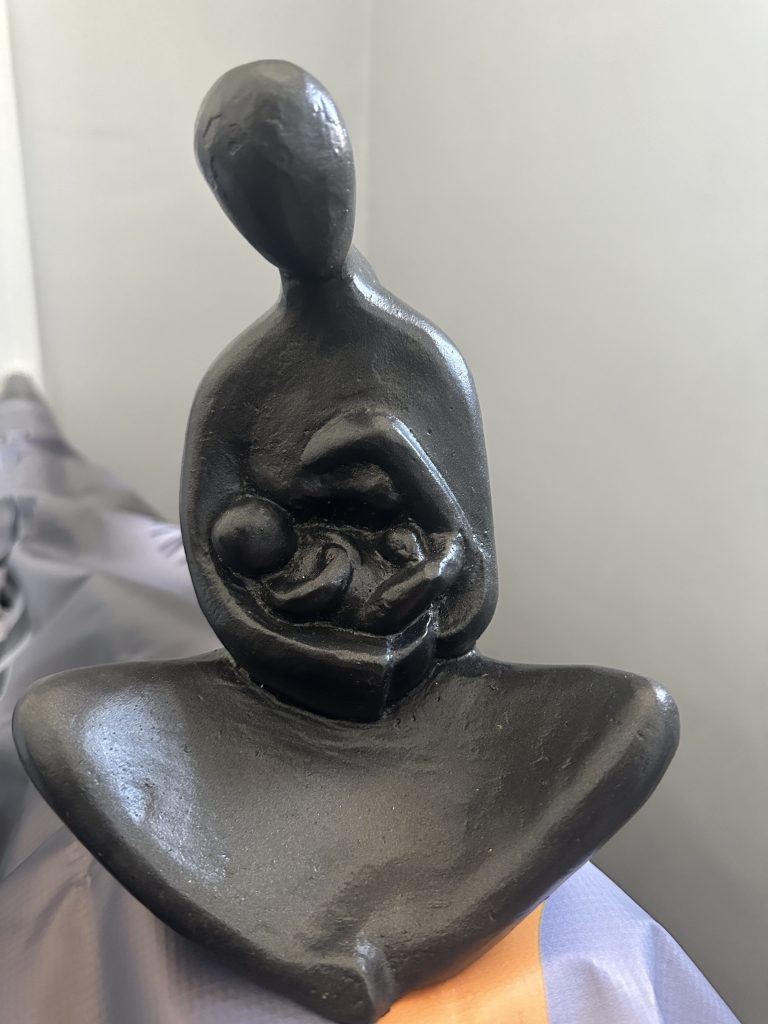
This artifact represents my commitment to anti-racism, social and reproductive justice. It is a demonstration of my intention to protect BIPOC women, birthing people, babies and families from the scourge of white supremacy and the oppressive impacts of patriarchy, capitalism and colonization on BIPOC communities. The statue also reminds me about my losses and my gains. In 2019, my eldest daughter, Shamony Makeba Gibson, became one of the thousands of black women and birthing people who were impacted by the crisis in black maternal health. She was 30 years old when she succumbed to a birth related pulmonary embolism and her death was preventable. She died doing the most natural thing that any human being can do which is bring new life into the world. She died because the providers who were charged to care for and cover her, did not listen to her when she expressed concerns about her symptoms. Shamony’s two children, her partner, siblings, extended family and community were left to mourn her untimely death and the impact can still be felt 5 years later. I have been a reproductive justice advocate and activist for close to 15 years, however, my knowledge, and hers, did not save her from the inequities and racism that permeate the entire healthcare system. This statue is a reminder for me to continue to do this sacred work in the community and it keeps Shamony’s life and legacy ALIVE. I have started a Foundation in her memory called ARIAH and my family and I have shared our story on a global level via a documentary called Aftershock where we tell her story and talk about the crisis in reproductive health in the United States. Thank you for this work.
Acknowledgements
The organisation of this exhibition was made possible with the support of the UCD College of Social Sciences and Law (Equality, Diversity and Inclusion/ Widening Participation).
©Tedam, Prospera 2026. This publication is licensed under a Creative Commons Attribution 4.0 International License.

